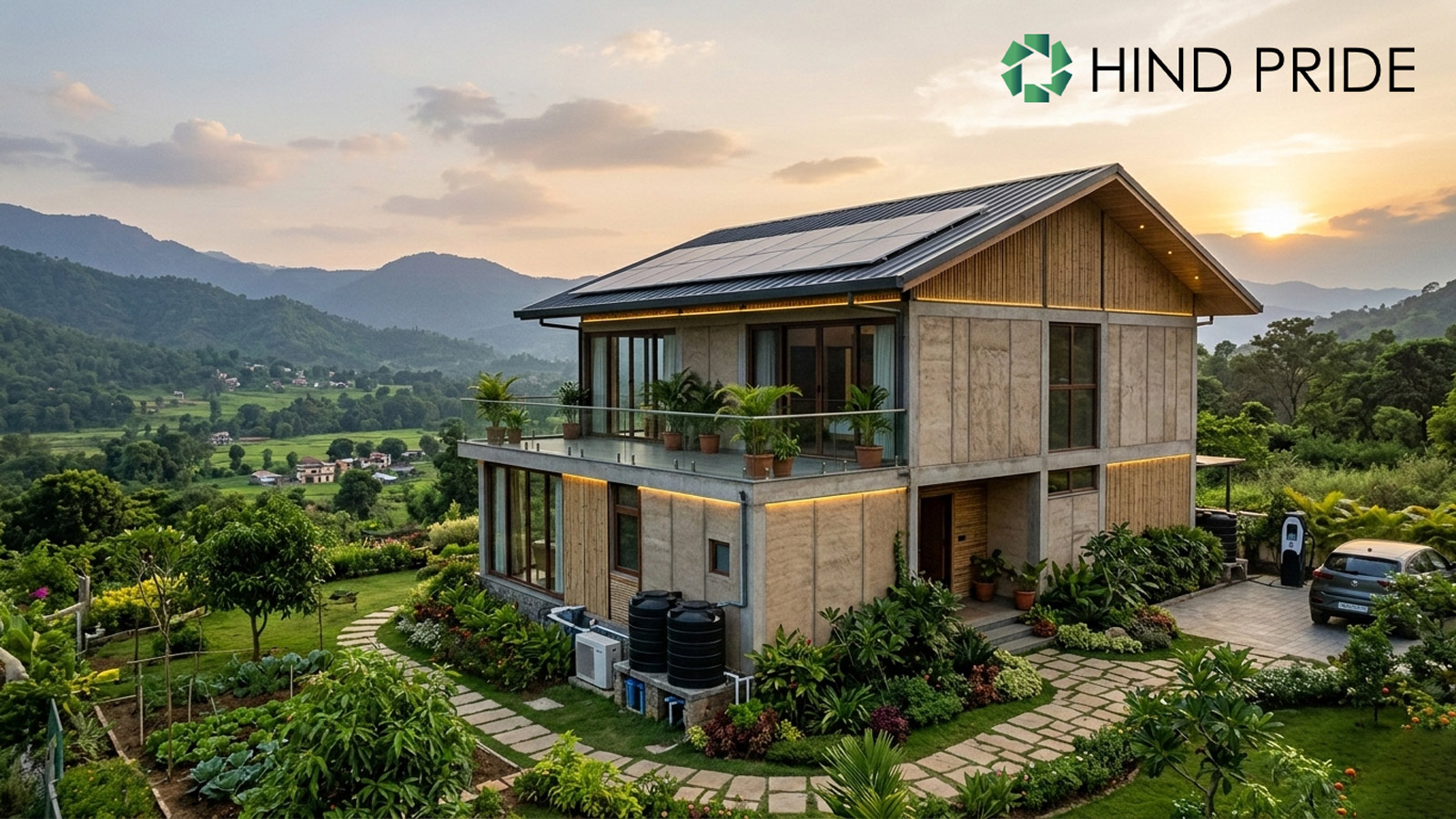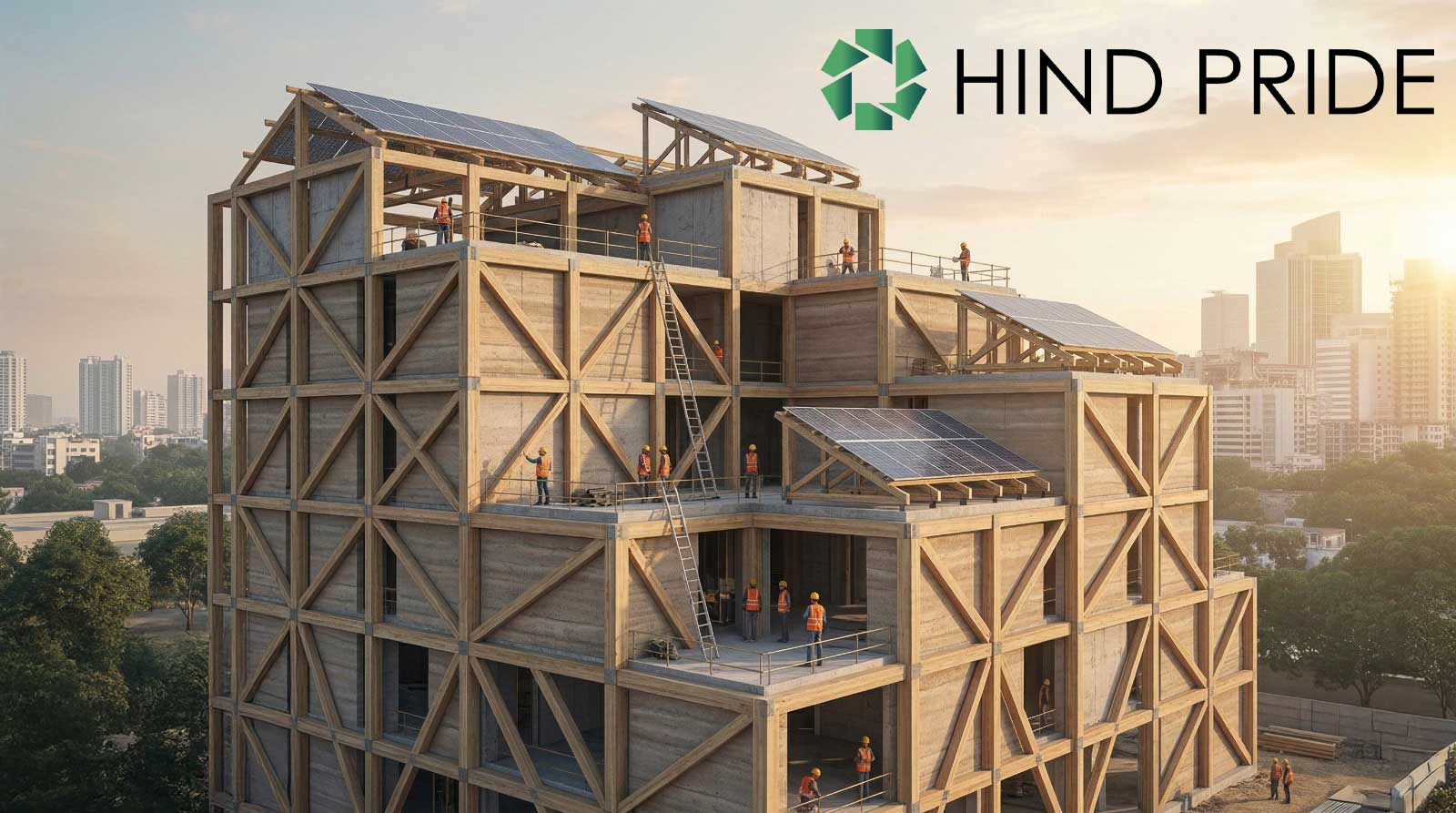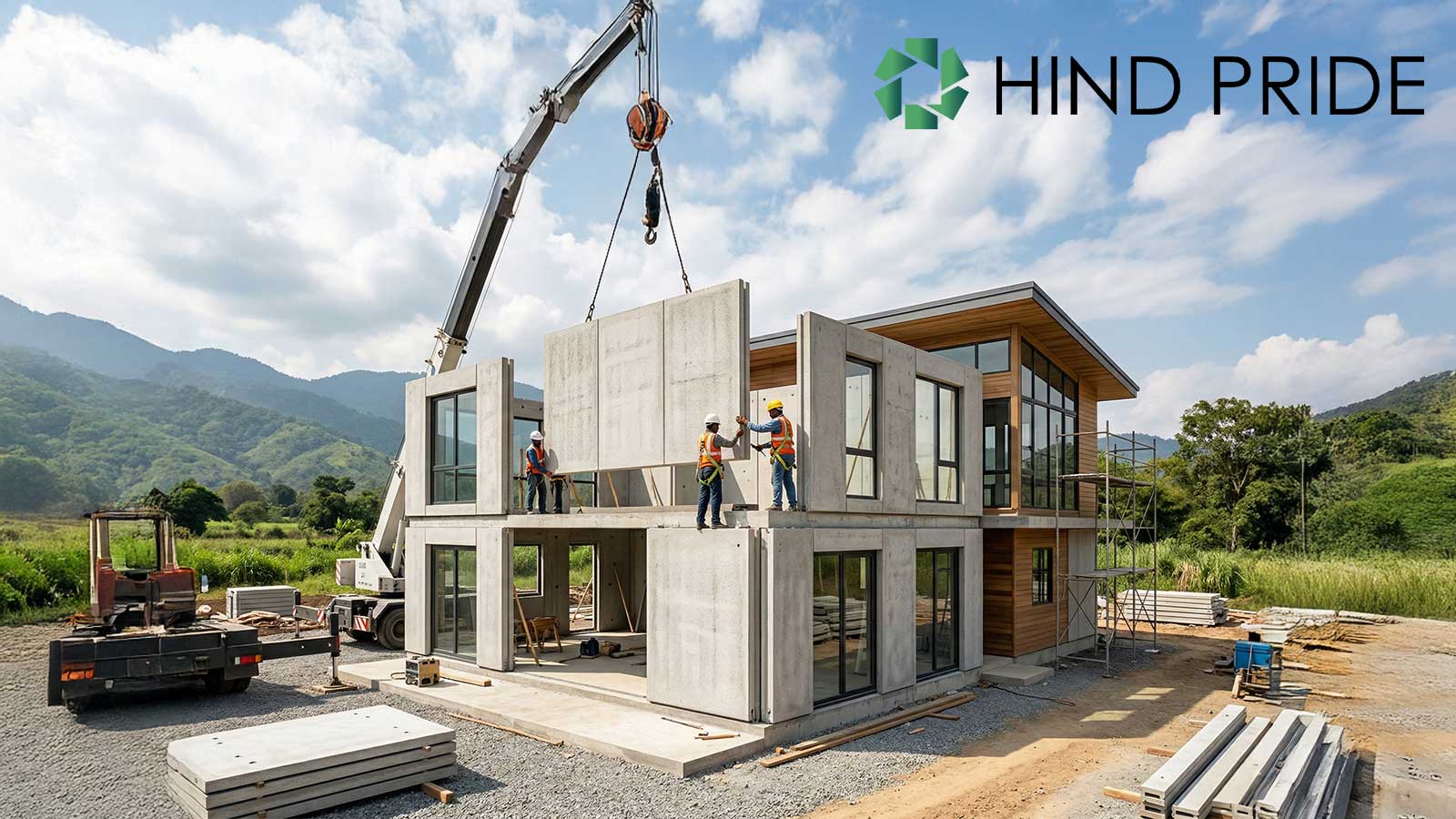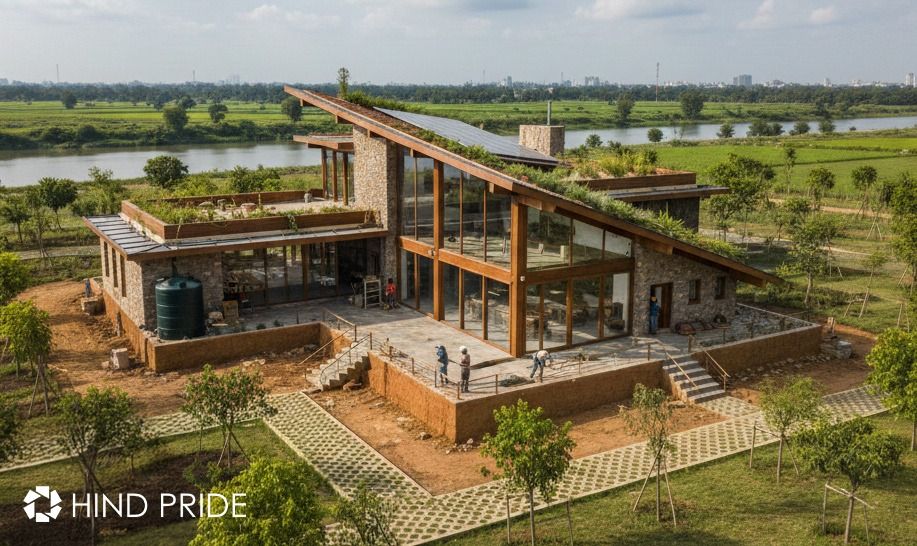
Why Eco-Friendly Construction Matters in India. India’s construction landscape is expanding at an unprecedented rate. Cities are growing, suburbs are sprouting, and residential and commercial infrastructure is seeing massive growth. Yet, this boom comes with high environmental costs. Traditional construction materials, especially reinforced cement concrete (RCC) and fired bricks, are major contributors to carbon emissions, energy consumption, and waste production. According to the Indian Green Building Council (IGBC), the construction sector accounts for nearly 20% of India’s total carbon footprint, underlining the urgent need for sustainable alternatives.
Homeowners, architects, and developers alike are increasingly asking: Is it possible to construct buildings that are eco-friendly, energy-efficient, and durable without compromising design or safety? This is where Khadar eco-friendly construction comes into focus. While khadar originally refers to fertile alluvial soil found along river floodplains, in the context of construction, it is interpreted as earth-based building methods that utilise natural soils as a primary material. These techniques are gaining attention as sustainable alternatives to conventional RCC and fired brick structures.
In this article, we explore the science behind khadar-based construction, its environmental benefits, its alignment with sustainable building principles in India, and practical considerations for implementing these methods effectively Khadar eco-friendly construction.
When people search for khadar eco-friendly construction, they are often seeking clarity on two things: the material itself and how it can be used in building. Traditionally, khadar refers to fertile soil deposited by rivers during seasonal flooding. This alluvial soil is rich in silt and clay, making it highly fertile for agriculture. However, architects and engineers have begun exploring its potential as a building material, particularly in earth-based construction methods Khadar eco-friendly construction.
Conventional building materials, such as cement, steel, and fired bricks, have a high environmental impact. The production of cement alone accounts for nearly 8% of global CO₂ emissions Khadar eco-friendly construction. Fired bricks require high-temperature kilns, consuming fossil fuels and generating considerable greenhouse gas emissions. By contrast, khadar-based construction relies on locally sourced soil, reducing transport-related emissions and requiring minimal energy processing.
Earth-Based Construction Techniques Using Khadar
Khadar-based construction typically involves techniques such as:
These methods are environmentally responsible, cost-effective, and suitable for climate-responsive designs, providing a natural alternative to energy-intensive materials.
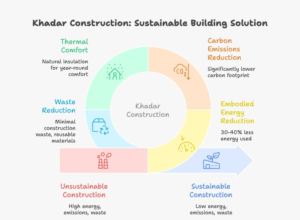
The environmental impact of any building is heavily influenced by the materials used. Khadar eco-friendly construction provides several measurable benefits:
1. Reduced Embodied Energy
Embodied energy is the total energy consumed in the extraction, processing, transportation, and installation of building materials. Earth-based construction methods, such as rammed earth and CSEB, require significantly less energy than RCC or fired brick masonry. Studies suggest that khadar-based construction can reduce embodied energy by 30–40% compared to traditional methods.
2. Lower Carbon Emissions
By avoiding cement-heavy RCC and fired bricks, khadar eco-friendly construction significantly reduces CO₂ emissions during both material production and building phases. Earth-based walls store carbon naturally and contribute to a lower overall carbon footprint.
3. Passive Thermal Performance
Earth-based walls have high thermal mass, which naturally regulates indoor temperatures. This means interiors remain cooler in summer and warmer in winter, Khadar eco-friendly construction reducing reliance on heating and cooling systems. Passive thermal performance aligns with climate-responsive design principles and is recognised in green building standards like the Energy Conservation Building Code (ECBC).
4. Reduced Construction Waste
Traditional construction produces large quantities of debris from fired bricks, concrete, and packaging. Khadar-based construction produces minimal waste, and leftover soil can be reused for landscaping or infill, enhancing resource efficiency Khadar eco-friendly construction.
5. Water Efficiency
Earth walls naturally absorb and release moisture, stabilising indoor humidity levels. This reduces the need for mechanical humidifiers or dehumidifiers and contributes to better indoor environmental quality.
To build trust and credibility, it is essential to reference scientific studies:
Metric | Conventional RCC & Bricks | Khadar/Earth-Based Construction |
Embodied Energy | High | 30–40% lower |
Carbon Emissions | High | Reduced significantly |
Thermal Comfort | Moderate | Excellent (passive regulation) |
Material Reuse | Low | High (soil reuse possible) |
Maintenance | Standard | Minimal if protected & stabilised |
These findings demonstrate that Khadar eco-friendly construction is not only theoretical but backed by research, offering a measurable reduction in environmental impact while enhancing building performance.
Despite its advantages, potential users often have concerns about khadar eco-friendly construction. Here’s what research and experience suggest:
1. Structural Strength
A common misconception is that soil-based walls are weak. Properly engineered rammed-earth walls and CSEBs provide robust structural performance. The inclusion of stabilisers, such as lime or a small percentage of cement, ensures long-term durability without compromising sustainability Khadar eco-friendly construction.
Earth-based walls are susceptible to water damage if untreated. Using lime or clay plaster finishes Khadar eco-friendly construction protects walls from rain and erosion while maintaining natural breathability.
3. Compliance with Building Codes
Modern green building codes in India, such as ECBC and CPWD climate-responsive guidelines, recognise well-engineered earth walls. Compliance with structural and safety standards eliminates legal or functional concerns.
For builders and homeowners interested in khadar eco-friendly construction, the process typically involves:
Khadar-based construction is ideal for:
While initial costs may be comparable to conventional construction, long-term energy savings, durability, and low maintenance make it a cost-effective choice over the lifecycle of the building.
After educating and addressing the main concerns, it’s appropriate to build trust. Hindpride brings decades of experience in sustainable construction, including eco-luxury farmhouses and low-carbon residential projects.
Our team understands the principles behind khadar eco friendly construction and integrates modern engineering with climate-responsive design and passive thermal strategies. We help clients build homes that are durable, sustainable, and energy-efficient, all while maintaining aesthetic excellence.
Soft CTA: “If you’re considering an eco-friendly home or sustainable commercial project, Hindpride can provide expert guidance on integrating natural materials, passive design, and research-backed construction practices.”
1. What is khadar eco-friendly construction, and how is it different from traditional building methods?
Answer:
Khadar eco-friendly construction refers to building techniques that use locally sourced soil materials, such as alluvial earth, to create walls and structures with minimal environmental impact. Instead of depending on cement and fired bricks — which have high embodied energy and carbon emissions — earth‑based methods like rammed earth or compressed stabilised earth blocks (CSEB) use natural soil, sometimes stabilised with a small percentage of lime or cement to improve strength. These methods significantly reduce energy use during production and transport, leading to lower environmental footprints compared to traditional materials. Studies show that earth blocks and rammed earth can reduce embodied energy by up to ~40% compared to conventional construction materials Khadar eco-friendly construction.
2. How does khadar eco friendly construction impact the environment compared to conventional methods?
Answer:
The environmental impact of construction largely depends on the materials used. Khadar eco-friendly construction typically uses soil and natural components that require minimal processing and transport, reducing carbon emissions and embodied energy. For example, research indicates that rammed earth walls — a common earth‑based technique — have far lower greenhouse gas emissions and embodied energy than concrete or steel. Rammed earth and CSEB are recyclable, biodegradable, and help reduce construction waste, contributing to more sustainable and circular building practices.
3. Can buildings constructed using khadar or earth‑based methods withstand weather and environmental stresses?
Answer:
Yes — soil‑based construction methods like rammed earth and earth blocks can be durable and resilient when designed and constructed properly. Modern engineering often incorporates stabilisers (like lime or small amounts of cement) and protective finishes to enhance water resistance and strength. Proper drainage and roofs with overhangs help protect earth walls from direct rain exposure, especially in monsoon‑prone regions. Earth blocks are also known to offer excellent fire resistance, pest resistance, and low maintenance over time compared to wood or other materials.
4. Does khadar eco friendly construction help improve indoor comfort and energy efficiency?
Answer:
Yes, one of the standout benefits of khadar eco-friendly construction is improved thermal performance. Soil‑based walls have high thermal mass, meaning they absorb heat during the day and slowly release it at night. This thermal lag helps stabilise indoor temperatures, reducing reliance on air conditioning and heating systems. As a result, buildings stay cooler in hot climates and warmer in cooler periods, helping lower energy bills and enhancing occupant comfort without additional mechanical systems.
5. Are buildings constructed with khadar or rammed earth more cost‑effective than conventional methods?
Answer:
In some cases, khadar eco-friendly construction can be cost‑effective — especially over the life of the building. While initial costs can be higher due to labour intensity or specialised techniques, long‑term savings arise from reduced energy bills, minimal maintenance, and lower material transport costs. Using locally available soil also reduces dependence on expensive, imported materials. Additionally, reduced energy consumption over time contributes to long‑term affordability.
6. What kind of soil is best for khadar or earth‑based construction?
Answer:
The ideal soil for khadar eco-friendly construction contains a balanced mix of sand, silt, and clay. Too much clay can cause cracking, while too much sand may reduce cohesion. Soil testing is often conducted before construction to adjust the mix, and stabilisers like lime or cement are sometimes added to improve strength and water resistance. Professional guidance ensures the right soil composition and strong, durable walls.
7. Can khadar or earth‑based construction methods comply with building regulations and codes?
Answer:
Yes — when engineered correctly, khadar eco-friendly construction methods like rammed earth and CSEB can meet local building codes and structural standards. Many green building rating systems and codes, including those in India and globally, recognise sustainable materials and earth‑based techniques as valid options as long as structural integrity, safety, and quality are demonstrated. Working with architects and engineers experienced in sustainable construction helps ensure compliance with relevant regulations.
8. Are there any risks or challenges associated with khadar eco friendly construction?
Answer:
While khadar eco friendly construction offers many benefits, there are some challenges:
These challenges can be mitigated with appropriate design choices, protective finishes, and professional oversight.
9. Is khadar eco friendly construction suitable for all climates and regions?
Answer:
Khadar eco-friendly construction is adaptable but performs best in semi‑arid to temperate climates where moisture control is manageable. In very wet or flood‑prone locations, additional moisture protection measures — such as elevated foundations, wide roof overhangs, and external plastering — are necessary to prevent water damage. Similarly, insulation strategies may vary by region to maintain thermal comfort. Its adaptability means designers can tailor earth‑based methods to fit local climate needs effectively.
10. How can Khadar Eco-Friendly Construction contribute to India’s sustainable building goals?
Answer:
India is increasingly focusing on low‑carbon and climate‑responsive construction. Khadar eco-friendly construction, through methods like rammed earth walls and CSEBs, contributes to this goal by reducing embodied energy, cutting carbon emissions, and improving energy efficiency in buildings. Choosing such materials supports green building certifications, encourages local material use, and sets a precedent for sustainable urban and rural development. This helps India meet its broader environmental targets while promoting resilient and healthy living spaces
As India continues to grow at an unprecedented pace, the construction sector faces a critical challenge: how to meet rising infrastructure demands without worsening environmental degradation. Traditional building methods, dominated by cement, steel, and fired bricks, are energy-intensive and generate significant carbon emissions. In this context, khadar eco friendly construction emerges as a scientifically validated, practical solution for sustainable development.
By leveraging locally sourced soils and earth-based techniques like rammed earth and compressed stabilised earth blocks (CSEB), builders can reduce the embodied energy of materials by 30–40% compared to conventional RCC and brick construction. These methods also offer superior passive thermal performance, naturally regulating indoor temperatures, reducing reliance on air conditioning and heating, and enhancing overall comfort for occupants. Moreover, earth-based walls are inherently durable, fire-resistant, and recyclable, aligning with circular economy principles and minimising construction waste.
Adopting khadar eco-friendly construction also supports India’s broader environmental and sustainability goals. Climate-responsive design, green building certifications, and low-carbon construction practices are becoming central to both residential and commercial projects. Integrating khadar-based techniques allows homeowners, architects, and developers to contribute meaningfully to these initiatives while simultaneously creating resilient, healthy, and aesthetically appealing structures.
While challenges such as moisture management, skilled labour requirements, and soil suitability exist, they can be effectively addressed through careful site assessment, proper soil testing, and modern engineering practices. In essence, khadar-based construction is not just an eco-friendly alternative; it is a comprehensive approach to building that balances sustainability, performance, and long-term cost efficiency.
For anyone considering an environmentally responsible building approach, Khadar eco-friendly construction offers a forward-looking path. It allows us to reconnect with natural materials, reduce carbon footprints, and create structures that harmonise with India’s diverse climates. By choosing earth-based techniques, we not only construct homes and buildings but also contribute to a sustainable legacy for future generations.