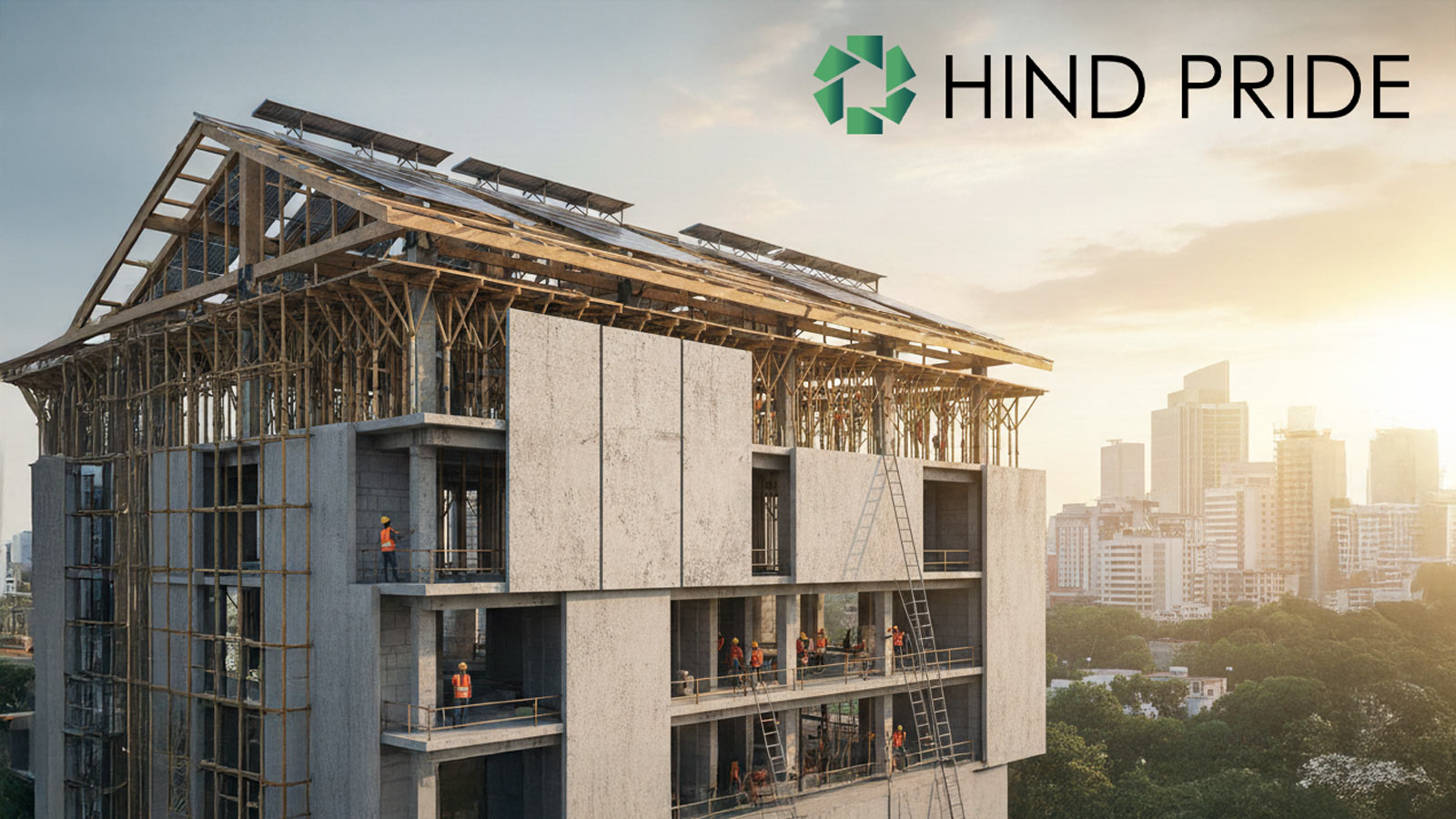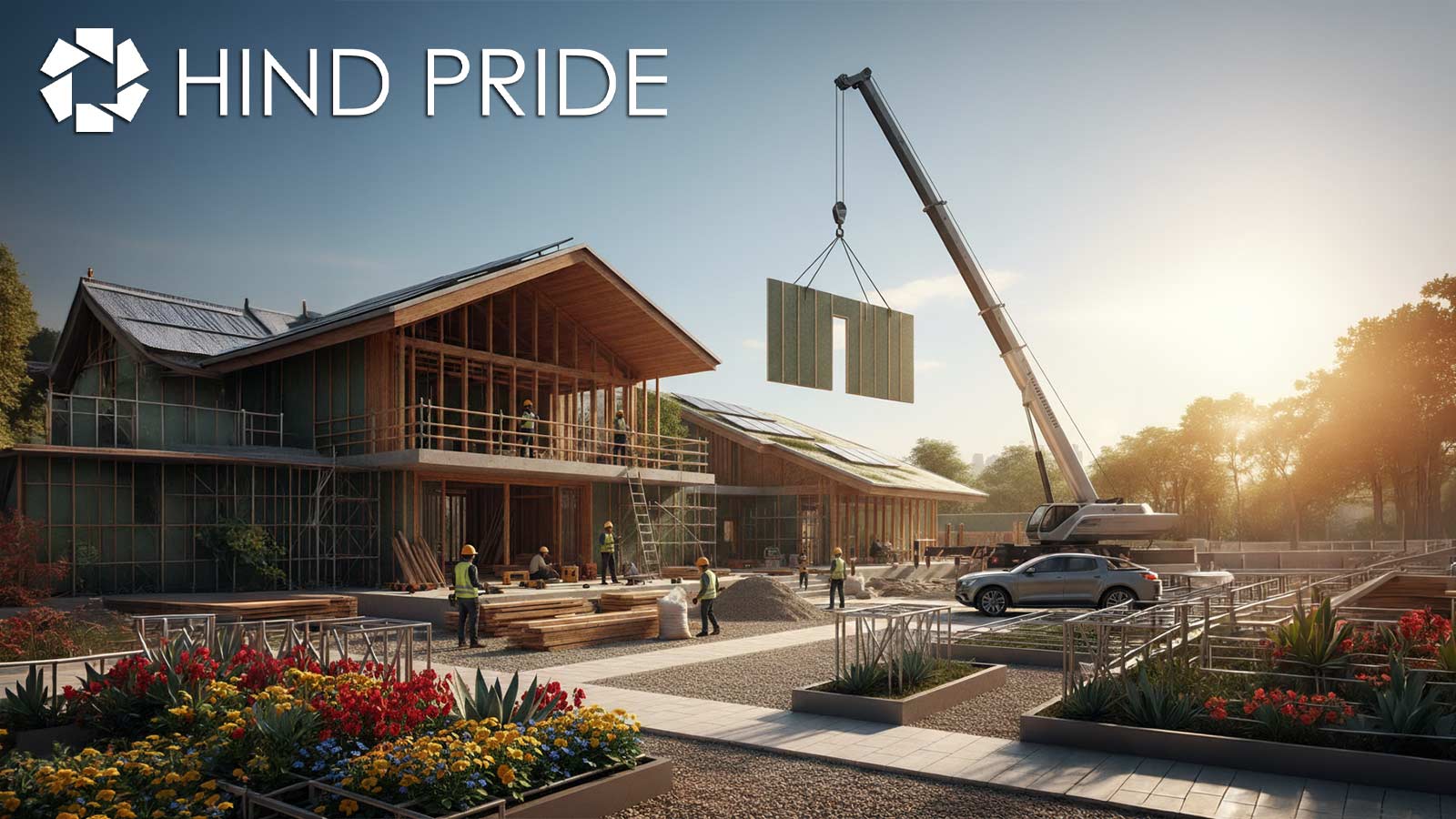
In 2026, the idea of a “good home” is evolving. It is no longer defined only by aesthetics, square footage, or location. Today, a future-ready home is measured by how efficiently it is built, how responsibly it uses materials, how comfortably it performs across seasons, and how predictably it can be delivered.
That shift is one of the biggest reasons PCC panels for sustainable homes are gaining serious attention across India and globally.
Construction is changing. Homeowners are becoming more aware of embodied carbon, energy efficiency, heat resilience, water conservation, and lifecycle durability. Governments are pushing for better-performing buildings. Energy costs are rising. Climate conditions are becoming more extreme. And families want homes that remain comfortable without excessive dependence on mechanical systems.
Within this broader sustainability transition, PCC panels for sustainable homes represent a structured, system-based approach to building — one that emphasizes precision, reduced waste, and improved envelope performance.
This article explores PCC panels for sustainable homes in depth — not as marketing hype, but as a construction method aligned with the priorities of 2026 and beyond.
The global building sector remains one of the most significant contributors to energy consumption and carbon emissions. According to the UNEP Global Status Report for Buildings and Construction (2024/2025), buildings account for roughly 32% of global energy consumption and about 34% of global CO₂ emissions.
In addition, embodied carbon — emissions linked to construction materials and processes — forms a growing percentage of a building’s lifetime environmental impact. The GlobalABC report highlights how material production, especially cement and steel, plays a major role.
This context is important. Sustainability is no longer only about solar panels or rainwater harvesting. It begins with how a home is built.
That’s where PCC panels for sustainable homes enter the conversation — as a method that can potentially reduce inefficiencies, minimize rework, and support better material optimization when executed correctly.
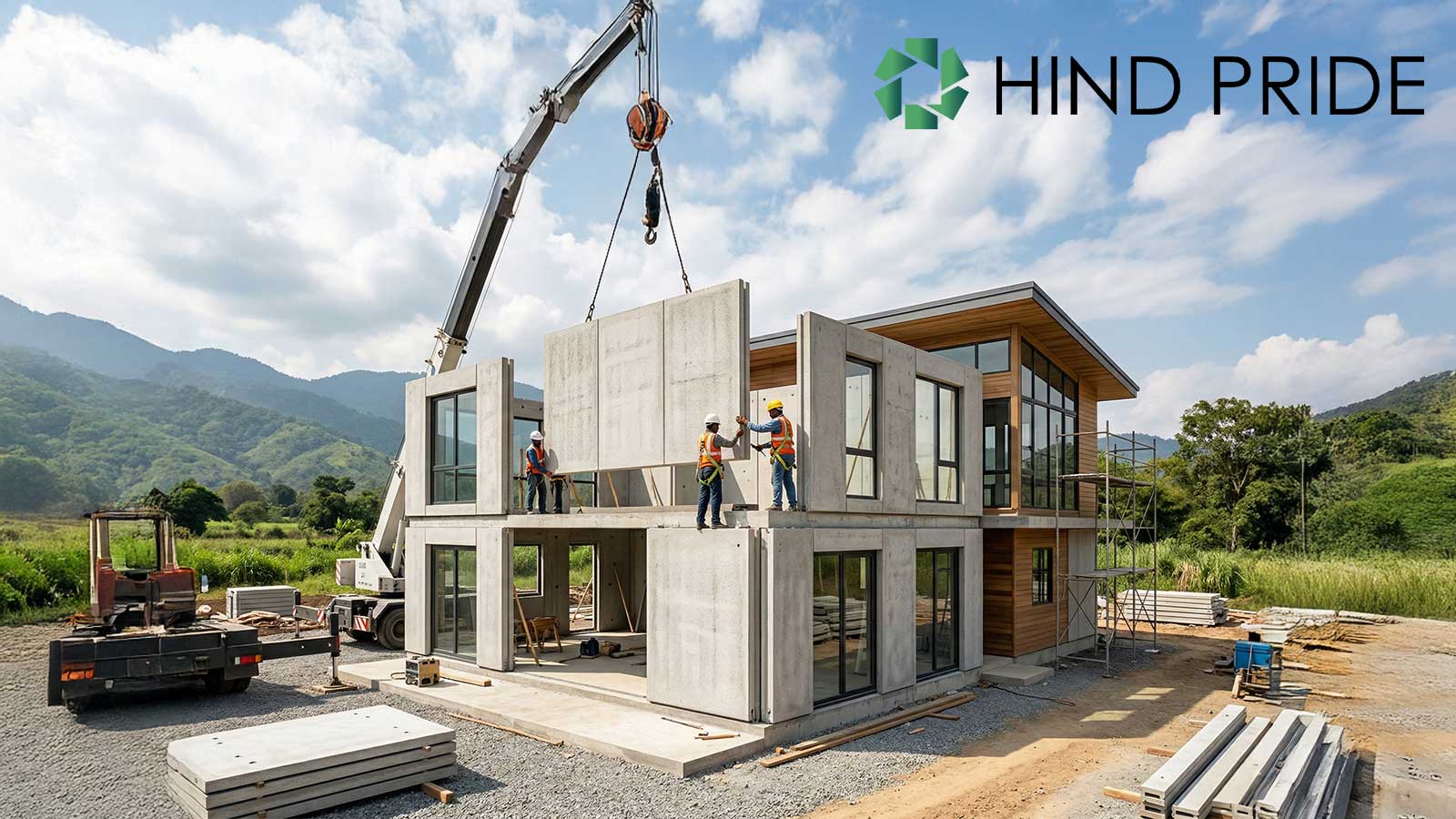
When we refer to pcc panels for sustainable homes, we are discussing precast concrete panels manufactured in controlled production facilities and assembled on-site.
Unlike traditional brick-by-brick masonry or fully on-site cast construction, PCC panels for sustainable homes involve:
The defining characteristic of PCC panels for sustainable homes is process control. A large portion of work shifts from open, weather-exposed construction sites to controlled manufacturing environments. This shift changes how waste, precision, and timelines behave.
Importantly, PCC panels for sustainable homes are not experimental or unregulated. Precast and prefabricated construction practices are supported by engineering standards and professional frameworks. In India, reference standards such as IS 15916 address prefabricated concrete practices.
1. Construction Speed Without Compromising Structural Integrity
One of the strongest advantages of PCC panels for sustainable homes is timeline efficiency.
Because panel manufacturing and site preparation can happen simultaneously, projects may experience reduced on-site durations. Construction productivity research suggests modular and prefabricated approaches can improve workflow efficiency and reduce site variability.
With pcc panels for sustainable homes, curing delays, unpredictable masonry pacing, and weather disruptions may be reduced compared to conventional methods.
However, it is important to clarify: speed depends on planning discipline. Projects using pcc panels for sustainable homes perform best when architectural and structural decisions are finalized early.
2. Reduced Material Waste and Improved Precision
Waste reduction is a critical sustainability lever. Rework, breakage, and material overruns significantly increase environmental impact.
Research in the Journal of Cleaner Production shows that higher levels of modularity are associated with improved on-site sustainability performance.
By centralizing production, PCC panels for sustainable homes can reduce on-site variability. Controlled batching, dimensional consistency, and repeatable production processes often lead to fewer corrective rebuilds.
Less rework means fewer wasted materials — and lower embodied impact per completed home.
3. Supporting Lower Carbon Pathways (With Responsible Framing)
Concrete is widely used in construction and is associated with emissions due to cement production. The Global Cement and Concrete Association highlights the industry’s ongoing efforts to reduce CO₂ intensity and transition toward net-zero.
It would be inaccurate to claim that concrete itself is “carbon-free.” However, PCC panels for sustainable homes can contribute to carbon efficiency in practical ways:
The carbon advantage of PCC panels for sustainable homes depends on logistics, material sourcing, and project planning. When transport distances are optimized and execution is well managed, panel systems can align with lower-impact construction goals.
4. Thermal Comfort and Envelope Performance
In India’s climate conditions, envelope performance determines comfort.
Studies on insulated precast sandwich panels indicate measurable improvements in thermal performance when insulation layers are incorporated within panel systems.
When designed properly, pcc panels for sustainable homes can:
However, envelope performance is holistic. Pcc panels for sustainable homes must be integrated with:
Panels are one component of a high-performance envelope — not the only component.
Energy efficiency is increasingly embedded in policy direction. The Energy Conservation Building Code (ECBC) 2017 establishes performance-oriented building guidelines in India.
While residential projects may not always fall directly under commercial ECBC mandates, the design principles increasingly influence residential best practices.
Pcc panels for sustainable homes align well with performance-driven thinking because they encourage structured planning, envelope discipline, and systematic construction.
Sustainability also means longevity. A home that requires frequent repairs or structural corrections increases lifecycle environmental impact.
PCC panels for sustainable homes, when designed and installed correctly, can offer:
The durability of PCC panels for sustainable homes depends heavily on joint waterproofing, structural engineering, and proper installation sequencing.
To ensure responsible evaluation, here are practical considerations:
PCC panels for sustainable homes function best when treated as a system — not just a material choice.
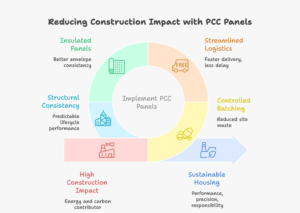
PCC panels for sustainable homes are particularly effective when:
They may be less advantageous when design changes are frequent or site logistics are extremely constrained.
Before committing, evaluate:
A disciplined checklist ensures that PCC panels for sustainable homes deliver intended outcomes.
1. What are PCC panels for sustainable homes, and how are they different from traditional construction?
PCC panels for sustainable homes refer to precast concrete panels manufactured in controlled production facilities and assembled on-site. Unlike traditional brick-and-mortar construction, where walls and slabs are built entirely on-site, precast systems shift much of the structural work to factory settings.
This controlled process often improves dimensional precision, reduces material waste, and allows parallel site preparation and panel production — potentially shortening overall project timelines.
Precast construction practices are recognized under Indian standards.
2. Are PCC panels for sustainable homes environmentally responsible?
Sustainability depends on multiple factors — material sourcing, logistics, design efficiency, and lifecycle performance.
PCC panels for sustainable homes can support sustainability by:
The global building sector contributes significantly to energy use and emissions, according to the UNEP Global Status Report for Buildings and Construction (2024/2025).
Reducing inefficiencies in construction methods — including through modular and precast systems — can contribute to improved environmental performance.
3. Do PCC panels reduce construction time compared to conventional methods?
In many cases, yes. Pcc panels for sustainable homes allow manufacturing and site preparation to occur simultaneously, reducing sequential delays.
Research into modular and prefabricated construction suggests improved workflow efficiency and productivity when planning is well managed.
However, timeline efficiency depends on early design finalization and proper installation planning.
4. How do PCC panels contribute to lower material waste?
Construction waste is often driven by rework, inaccurate measurements, and on-site variability.
Because PCC panels for sustainable homes are produced in controlled environments, batching and dimensional accuracy can be improved. This may reduce breakage, excess material use, and repeated corrections.
Research published in the Journal of Cleaner Production highlights how modularity in construction is linked with improved sustainability performance.
5. Are PCC panel homes cooler and more comfortable in hot climates?
Thermal comfort depends on the full building envelope — including walls, roof, glazing, shading, and ventilation.
When integrated properly, pcc panels for sustainable homes can support consistent wall performance. In some configurations, insulated precast sandwich panels can improve thermal resistance.
However, panels alone do not determine comfort. A holistic design strategy remains essential.
6. Do PCC panels help reduce embodied carbon in construction?
Concrete production involves emissions due to cement manufacturing. The Global Cement and Concrete Association outlines ongoing industry efforts to reduce CO₂ intensity.
Pcc panels for sustainable homes can support lower embodied impact when:
Embodied carbon performance depends on project-specific decisions.
7. Are PCC panels structurally safe and compliant in India?
Precast and prefabricated construction systems are supported by engineering standards and codes. In India, IS 15916 guides prefabricated concrete construction practices.
Structural safety depends on professional engineering design, proper load calculations, seismic considerations, and quality-controlled installation.
8. How do PCC panels align with India’s energy efficiency direction?
India’s Energy Conservation Building Code (ECBC 2017) promotes energy-efficient building practices, including improvements in envelope performance.
While not all residential buildings are mandated under ECBC, the performance principles influence modern construction thinking. Pcc panels for sustainable homes can align with these principles when integrated into broader energy-efficient design strategies.
9. What are the maintenance requirements for PCC panel homes?
Maintenance for PCC panels for sustainable homes is typically comparable to reinforced concrete structures. Key areas to monitor include:
Proper detailing during installation reduces long-term maintenance risks.
Durability and lifecycle assessment are important aspects of sustainable construction, as highlighted in lifecycle-focused sustainability research such as the GlobalABC reports.
10. Are PCC panels suitable for all types of residential projects?
PCC panels for sustainable homes are particularly suitable for projects that prioritize:
However, highly irregular architectural forms or sites with severe logistical constraints may require additional planning adjustments.
Choosing PCC panels for sustainable homes should be based on site conditions, design goals, engineering feasibility, and long-term performance objectives.
The future of housing is no longer defined only by size, luxury, or location. In 2026 and beyond, it is increasingly defined by performance, efficiency, durability, and environmental responsibility. Sustainable housing is evolving from a niche concept into a structural expectation — shaped by climate realities, energy economics, and smarter construction technologies. Within this shift, PCC panels for sustainable homes are becoming part of a broader movement toward precision-driven, lower-impact building systems.
1. Performance Over Appearance
Modern homeowners are asking different questions:
These are performance-driven questions. According to the UNEP Global Status Report for Buildings and Construction (2024/2025), the building sector remains responsible for roughly one-third of global energy consumption and emissions — making construction methods central to climate action.
As attention shifts toward lifecycle performance, pcc panels for sustainable homes offer a structured pathway. By emphasizing controlled production, dimensional accuracy, and reduced rework, these systems align with a performance-first future.
2. Embodied Carbon Will Shape Design Decisions
In the coming decade, embodied carbon will increasingly influence residential construction decisions. The GlobalABC report highlights that material production — particularly cement and steel — plays a substantial role in overall building emissions.
The conversation is not about eliminating concrete; it is about using materials more efficiently and intelligently. This is where PCC panels for sustainable homes can contribute. When projects reduce rework, optimize material batching, and minimize waste, the embodied impact per completed home can decrease.
Additionally, the Global Cement and Concrete Association continues to outline pathways toward lower-carbon cement production and net-zero ambitions.
As cement technology evolves and production processes improve, structured systems like PCC panels for sustainable homes can integrate into these advancements more efficiently than fragmented on-site construction methods.
3. Climate Resilience and Thermal Stability Will Become Non-Negotiable
Rising temperatures and longer heat waves are pushing homeowners to prioritize envelope performance. The future sustainable home must maintain thermal comfort with reduced dependence on energy-intensive cooling.
Research into insulated precast sandwich panels demonstrates measurable thermal performance benefits when insulation is integrated within structural panels.
When implemented correctly, PCC panels for sustainable homes can contribute to:
However, the future of sustainable housing will rely on systems thinking. PCC panels for sustainable homes perform best when paired with roof insulation, shading design, ventilation planning, and energy-conscious glazing strategies.
4. Construction Efficiency Will Drive Economic Sustainability
Sustainability is not only environmental; it is also economic. Construction delays increase financing costs, labor exposure, and project uncertainty. Efficient workflows improve affordability and predictability.
Research into modular and prefabricated construction highlights how structured systems can improve productivity and reduce inefficiencies.
By allowing simultaneous site preparation and off-site manufacturing, pcc panels for sustainable homes can support streamlined project delivery. Over time, this efficiency contributes to reduced financial volatility — an important component of long-term sustainable housing ecosystems.
5. Waste Reduction Will Become a Regulatory Focus
Construction waste is increasingly recognized as a systemic challenge. Research in sustainable construction practices demonstrates that modular approaches often improve waste management outcomes.
As municipalities and regulators push toward cleaner urban development, PCC panels for sustainable homes may align well with waste reduction goals. Controlled manufacturing, predictable quantities, and minimized rework reduce site debris and material inefficiencies.
6. Policy Alignment and Code Evolution
India’s Energy Conservation Building Code (ECBC 2017) reflects the country’s broader direction toward energy-efficient buildings.
While not every residential project falls directly under ECBC mandates, performance-based thinking is becoming mainstream. Homes built today must anticipate stricter efficiency norms tomorrow.
Because PCC panels for sustainable homes encourage disciplined planning and envelope consistency, they can align naturally with evolving performance expectations.
7. Lifecycle Thinking Will Define True Sustainability
The future sustainable home is not judged only at handover. It is evaluated across decades.
Questions that will matter:
When engineered and installed correctly, PCC panels for sustainable homes can offer durability, structural consistency, and predictable long-term behavior. Lifecycle stability reduces environmental and financial burdens over time.
The future of sustainable housing will not rely on one single material or method. Instead, it will favor systems that combine:
Within this evolving landscape, PCC panels for sustainable homes represent a structured, forward-looking approach that integrates well with modern engineering practices and sustainability goals.
They are not a shortcut. They are not a marketing label. They are part of a larger shift toward intelligent, performance-driven housing — homes designed to serve families efficiently for decades while minimizing unnecessary environmental strain.
As India continues progressing toward smarter, more resilient residential development, several eco-focused builders are applying structured panel-based construction systems thoughtfully and responsibly. Hindpride is one such organization participating in this evolving ecosystem of PCC panels for sustainable homes, aligning construction efficiency with long-term sustainability priorities.