Solar-Ready Homes in Delhi NCR: The New Standard for Farmhouses & Luxury Living (2025 Guide)
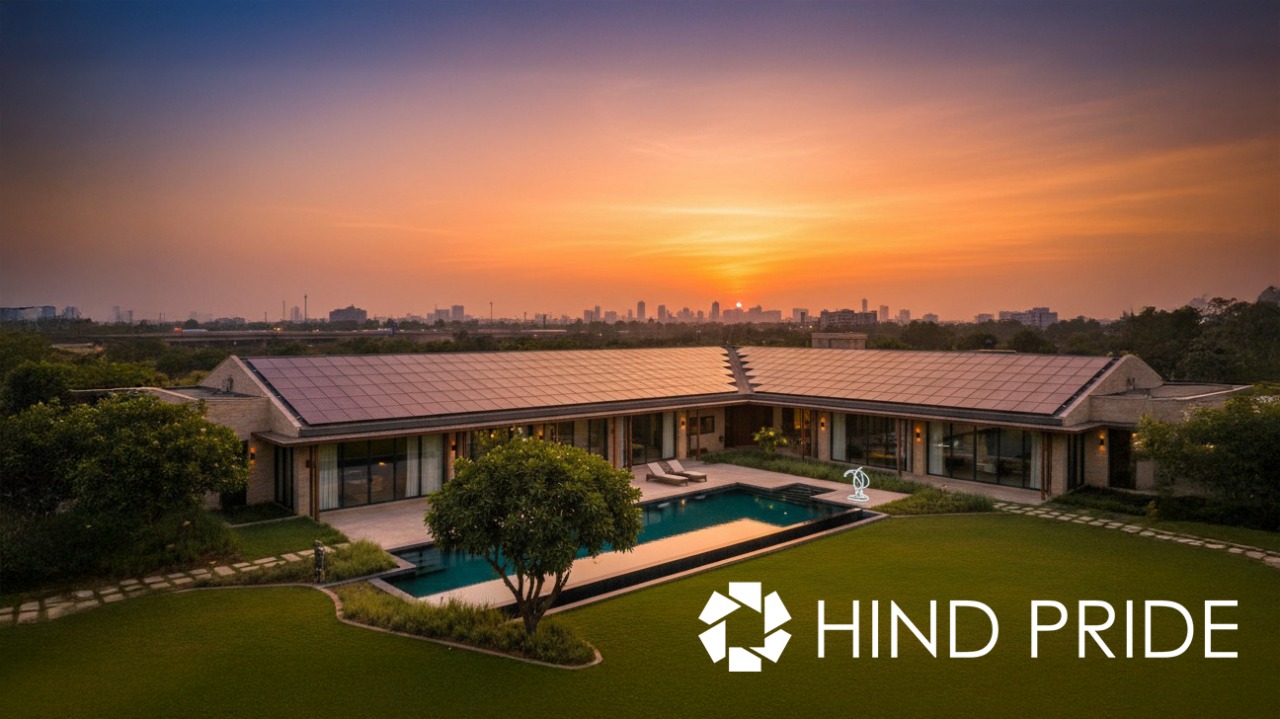
Imagine this: your dream farmhouse on the outskirts of Delhi. Lush lawns, a sparkling pool, weekend barbecues, friends flying in, kids running around… and then the bill arrives. ₹15,000. ₹25,000. Some months, even more.
The very place that was supposed to give you freedom quietly starts feeling like a fixed liability.
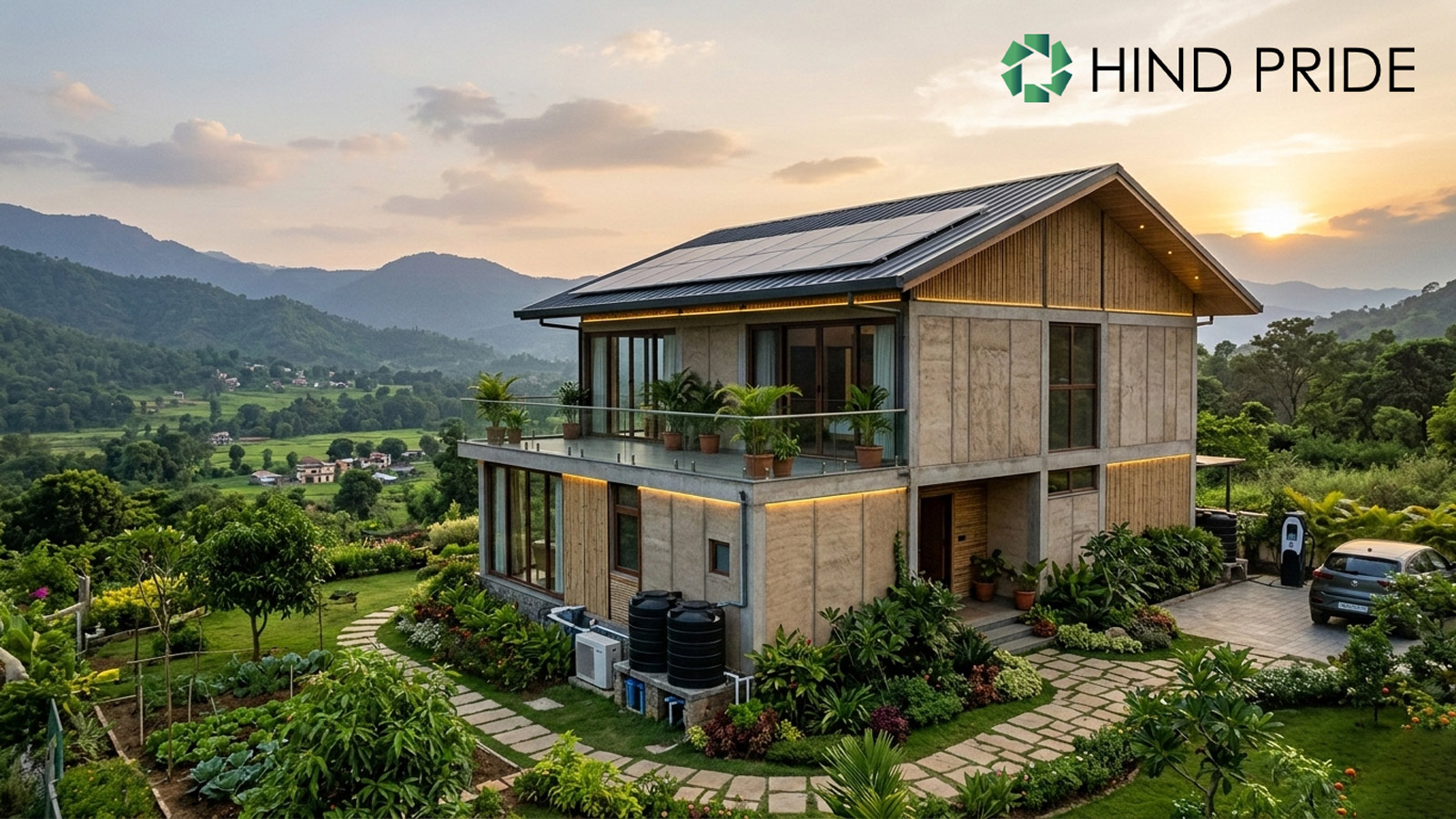
Now flip that picture. Same farmhouse. Same lifestyle. But your rooftop quietly generates most of your electricity. Your meter often runs backward. Your kids tell their friends, “Our home makes its own power.”
This is the emotional and financial shift that solar-ready homes in Delhi NCR are creating in 2025. Not just “homes with panels”, but homes designed from Day 1 to be solar-smart, subsidy-ready, and future-proof.
In this long-form, WordPress-friendly, SEO-optimised guide, we’ll break down:
The policy and subsidy tailwind behind solar-ready design
Real cost and payback math for farmhouses
What actually makes a home solar-ready (not just marketing)
Lifestyle and investment advantages
A practical roadmap to choose or build such a home – especially with a Delhi NCR farmhouse lens
Throughout, you’ll see references from government publications and credible news outlets, so the content stays fact-based, not fluffy.
Just five years ago, rooftop solar on homes in Delhi-NCR was seen as an “extra”. Something only hardcore sustainability geeks or a few premium homeowners tried.
That changed when the Union Cabinet approved PM Surya Ghar: Muft Bijli Yojana in February 2024 — a scheme with an outlay of ₹75,021 crore to install rooftop solar in one crore households across India and provide up to 300 units of free electricity per month.
The message from the government was clear:
“Rooftop solar is no longer an experiment. It’s the future of residential power.”
In parallel, Delhi pushed its own Delhi Solar Energy Policy 2023, notified in March 2024, targeting 750 MW of rooftop solar in just three years, plus 3,750 MW from utility-scale projects outside the state.
So if you’re looking at solar-ready homes in Delhi NCR today, you’re not early — you’re arriving in the middle of a wave that’s already rising.
The emotional side: anxiety versus assurance
Luxury farmhouses and villas are supposed to be anchors of peace. Yet, owners quietly worry about:
Rising electricity tariffs
Uncertain and hotter summers
Power disruptions during peak load
The feeling of “burning” energy in a climate-stressed world
Solar-ready design doesn’t just solve a technical problem. It gives you a psychological shift:
From “how big will the bill be this month?”
To “my home is under my control — it even earns its keep.”
That emotional assurance is a big part of why solar-ready homes in Delhi NCR are becoming a benchmark for next-gen luxury.
PM Surya Ghar: Muft Bijli Yojana – the national driver
The PM Surya Ghar scheme is not a small policy tweak. It is a national mission:
Outlay: ₹75,021 crore
Target: One crore households
Benefit: Up to 300 units of electricity free per month through rooftop solar
A later government update highlighted that the scheme helped enable around 7 lakh rooftop solar installations in just ten months in 2024, showing how quickly households are responding when incentives and processes align.
For a farmhouse owner, this matters because:
Vendors, banks and discoms are now geared for residential solar.
Awareness and comfort are rising; you’re not a guinea pig.
Policies around rooftop solar are here for the long run, not a one-season fad.
When solar-ready homes in Delhi NCR are built, they are designed to plug into this central scheme smoothly, instead of retrofitting later.
Delhi Solar Energy Policy 2023 – why NCR is a sweet spot
Delhi’s Solar Energy Policy 2023, notified in March 2024, set a clear target:
750 MW of rooftop solar inside Delhi in three years
3,750 MW from outside the state through utility-scale projects.
It also offers:
State capital subsidy
Generation-based incentives
Group net metering and virtual net metering models
This policy, combined with central support, makes solar-ready homes in Delhi NCR not just good for the environment, but financially smart too.
July 2025: Delhi triples the rooftop subsidy
In July 2025, Delhi revised its rooftop solar subsidy dramatically:
Subsidy raised to ₹10,000 per kW up to 3 kW
Maximum ₹30,000 per consumer, effectively tripling the earlier rate.
This is on top of the central subsidy under PM Surya Ghar. The combined relief can reach over ₹1 lakh for small residential systems, sharply reducing effective costs.
For solar-ready homes in Delhi NCR, especially farmhouses that might install 5–10 kW systems, this means:
Lower upfront burden
Faster payback
Higher long-term ROI
BSES data: proof that rooftop solar is already saving crores
The BSES discoms (BRPL and BYPL) have energised over 10,000 rooftop solar connections in Delhi, adding around 220 MWp of green capacity and helping consumers save around ₹160 crore every year on electricity bills.
Of these:
Around 6,900 connections are in the domestic category
Savings for residential users alone are estimated at ₹35 crore per year
So when you’re thinking about solar-ready homes in Delhi NCR, you’re not betting on a theoretical model; you’re connecting to a trend that’s already saving real money for thousands of families.
Zoom out from Delhi for a moment. At the national level:
India installed 3.2 GW of rooftop solar in 2024, an 88% jump over 2023, driven largely by residential growth.
A policy and data review in early 2025 notes strong potential, with India enjoying 4–7 kWh/m²/day solar incidence and 300+ sunny days a year.
By FY2025, total new solar capacity additions (mostly utility-scale) touched ~23.8 GW in a single year.
When the macro numbers are this strong, it’s clear:
Real estate that is not aligned with renewable energy may feel outdated sooner than you think.
Solar-ready homes in Delhi NCR ride this macro wave instead of fighting against it.
Take a typical Delhi NCR farmhouse or luxury villa:
4–6 bedrooms across main and guest blocks
Full-time staff quarters
A pool filtration system
A realistic consumption band:
1,000–1,500 units per month in active seasons (summer, festive time)
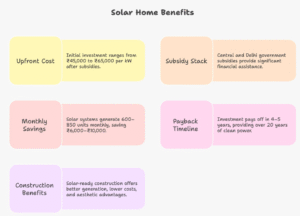
At an average effective tariff of ₹9–12 per unit (after slabs & surcharge), that’s ₹9,000–₹18,000 per month, easily higher for very large properties
Over 12 months, you could be spending ₹1.5–2.5 lakh per year purely on electricity.
Now imagine paying that for 10–15 years without any hedge. That’s ₹15–30 lakh going only into bills — with zero asset value attached.
Solar system cost bands for Delhi NCR homes
Market analysis and industry calculators suggest that for households in Delhi NCR:
A 3 kW rooftop system (suited for smaller homes) can cost around ₹1.8–2.2 lakh before subsidy
A 5 kW system may be ₹3–3.8 lakh before subsidy
Larger 7–10 kW setups typical for premium farmhouses can be ₹4.5–7+ lakh before subsidy
With central + Delhi subsidy combined (up to ₹30,000 from Delhi and additional support from PM Surya Ghar for smaller capacities), effective costs for the first few kW drop sharply.
For solar-ready homes in Delhi NCR, the installation is even more cost-efficient because:
Roof structure and tilt are pre-engineered
Conduits and mounting provisions exist
No need for expensive rework or civil changes
Real payback examples for solar-ready farmhouses
Let’s take a conservative example for a farmhouse:
Case: 7 kW system on a solar-ready home
Approx annual generation in Delhi: 9,000–10,000 kWh (based on 4–4.5 kWh/kW/day)
Monthly average: 750–830 units
If your tariff is ~₹10 per unit, potential annual saving: ₹90,000–₹1,00,000
Assume net effective system cost after subsidies & solar-ready design efficiencies: ₹4–4.5 lakh
Estimated payback: 4–5 years
From year 5/6 onwards, your farmhouse is effectively co-funded by the sun for the remaining 15–20 year life of the system, with minor O&M costs (cleaning, inverter replacement eventually).
From bill shock to “silent income stream”
Because of net metering, surplus generation can be exported to the grid, further offsetting your bill. In Delhi, BSES has already seen residential consumers collectively saving ₹35 crore annually from rooftop solar — a sign that households are monetising their roofs effectively.
So, solar-ready homes in Delhi NCR don’t just reduce bills — they behave like micro-assets sitting on your roof.
Your roof is no longer dead space; it’s a quiet income-generator.
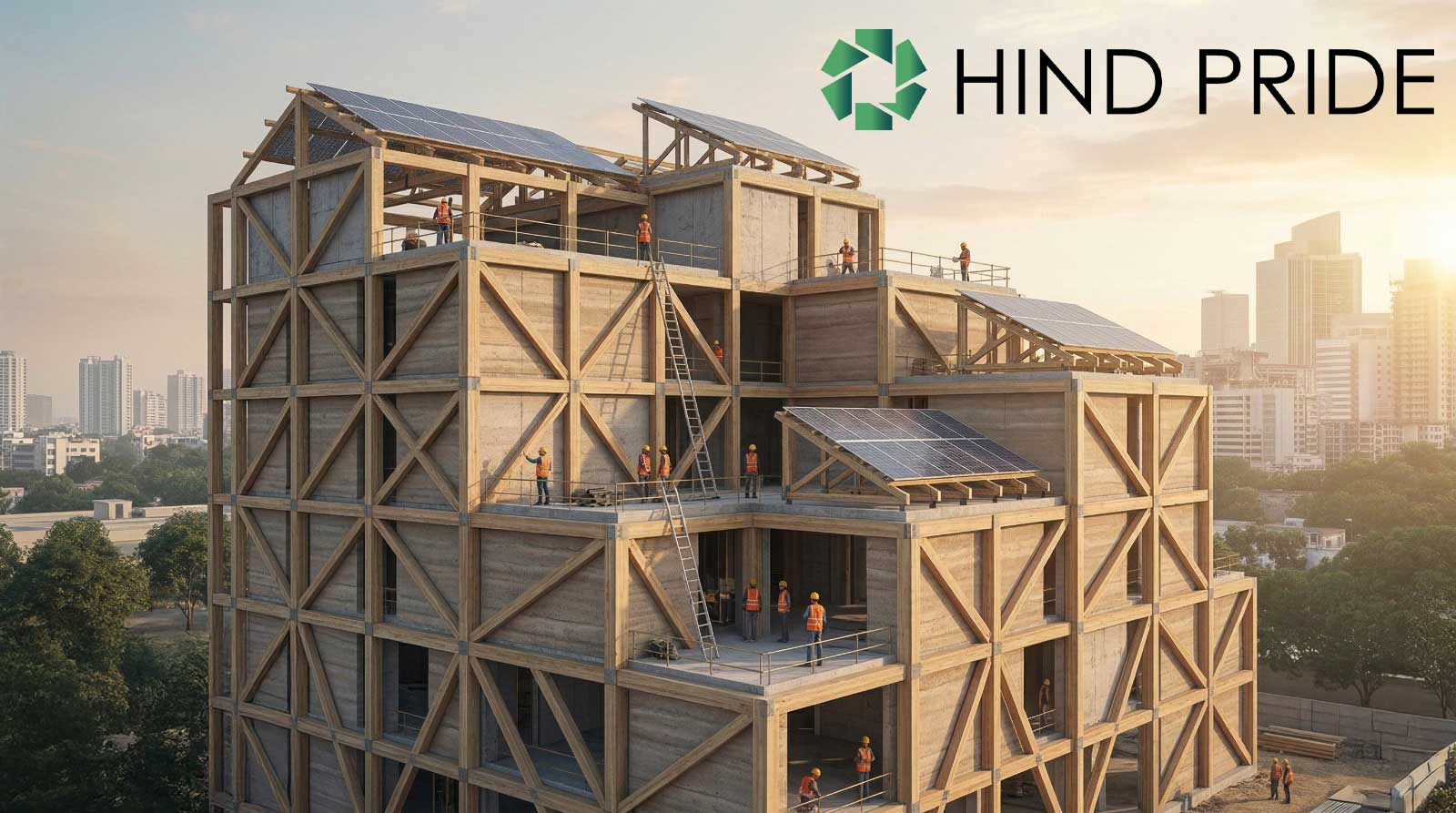
“Solar-ready” isn’t just slapping a few panels wherever there’s some space. Truly solar-ready homes in Delhi NCR are engineered strategically.
1. Roof orientation, tilt and shading
A smart solar-ready design ensures:
Major roof surfaces face south or south-west, optimised for Delhi’s sun path
Minimal shading from neighbouring structures, parapets, water tanks or trees
Roof load-bearing capacity is calculated to handle panels, mounting hardware and wind loads
These factors are far easier and cheaper to design at blueprint stage than to fix later.
2. Structural and waterproofing readiness
Solar-ready roofs factor in:
Appropriate RCC thickness or structural steel calculations
Mounting points planned with waterproofing in mind
Safe walking paths for installers
A non-solar-ready roof often needs retrofitted anchoring, which can create long-term leakage risks if not handled perfectly.
3. Electrical planning – dedicated solar circuit
In solar-ready homes in Delhi NCR, MEP drawings usually include:
Dedicated conduits from panel area to inverter room
Pre-marked locations for inverters and distribution boards
Separation of critical loads (like lighting, fridge, pumps) into a circuit that can later be backed by batteries
This avoids messy surface wiring later and helps keep the interiors and terraces aesthetically clean.
4. Space for EV charging & battery storage
Solar-ready in 2025 also means:
Provisioned cabling routes to parking areas for future EV chargers
Reserved space and ventilation for battery storage, even if you install batteries later
Smart home integration capability, to monitor solar generation and consumption via app
For high-end solar-ready homes in Delhi NCR, this is the true sign of a builder thinking 10–20 years ahead, not just one brochure cycle.
5. Architectural integration – it must still look luxurious
Finally, solar-ready design must ensure the villa or farmhouse still looks premium:
Panels aligned with roof lines and pergolas
Options for solar carports rather than random patchwork installations
Consideration of visibility from key view corridors
The best projects make the solar element an aesthetic feature, not a compromise.
Quiet power, quiet mind
There is a different peace in walking into your farmhouse, switching on all the comforts and knowing:
“The sun is paying for most of this.”
That mental freedom is one of the biggest emotional advantages of solar-ready homes in Delhi NCR. You’re not mentally calculating units every time you turn on the pool lights.
Pride and storytelling
In a world where sustainability is part of status, telling guests, “This home generates most of its power from rooftop solar,” hits differently.
For NRIs, entrepreneurs and next-gen wealth holders, a solar-ready farmhouse becomes a signature story:
You’re not just buying from a brochure
You’re consciously backing the energy transition in your own home
Better resilience during heatwaves & peak load
Delhi NCR is seeing hotter summers and peak load stress. When grid conditions are tight, homes that depend 100% on the grid feel vulnerable.
Solar-ready + battery capable homes can:
Support essential loads in outages
Reduce stress on the grid
Maintain comfort without panic
This resilience is increasingly part of how premium real estate is evaluated globally.
Legacy: what are you leaving behind?
When you invest in a farmhouse, you’re buying a legacy asset — a place your children and grandchildren might inherit.
A solar-ready house says:
“We thought financially long-term.”
“We thought environmentally long-term.”
It’s luxury with conscience, not just luxury with consumption.
Operating cost is becoming a key filter
Future buyers will not only ask “Where is the farmhouse?” and “How big is the plot?” They will ask:
“What is the average monthly electricity bill?”
“Is the home solar-ready?”
“Can it support EVs and batteries easily?”
If two properties are similar but one is built as a solar-ready home in Delhi NCR and the other is not, the operating-cost profile will tilt buyer preference.
Policy and finance trends favour green assets
From India’s larger push to 500 GW of non-fossil capacity by 2030 Reuters to regional solar policies like Delhi’s, one pattern is clear:
Regulations, finance products and incentives are increasingly tilted towards low-carbon, energy-efficient assets.
That suggests that in the medium-term:
Solar-ready or green-aligned properties will be easier to finance, refinance and sell.
Homes that ignore these trends may suffer a “brown discount”.
Risk of buying a non-solar-ready farmhouse today
If you buy a farmhouse in 2025 with no clear solar-ready thought, you may face:
High retrofit costs
Complex civil and electrical rework
Potential regulatory or policy friction later
Reduced buyer interest when you want to exit
In contrast, solar-ready homes in Delhi NCR are built in alignment with where policy and technology are heading.
Minimum carbon, maximum innovation
Hindpride’s vision for Delhi NCR farmhouses blends:
Land wisdom – using the site intelligently
Modern engineering – including solar-first thinking
Lifestyle design – layouts that are beautiful and energy-intelligent
Solar-ready design is integrated across roof, structure, electricals and landscape.
How Hindpride creates solar-ready homes in Delhi NCR
Typical steps:
Solar-potential study at master-planning stage
Roof and structural design optimised for panel zones
Dedicated solar risers and DBs integrated in MEP plans
Space for inverter/battery rooms and EV charging
Coordination with empanelled rooftop vendors eligible under PM Surya Ghar and Delhi policy schemes
Optional solar pergola or carport solutions for added generation
The result: a farmhouse that is “solar-enabled” from the day you take possession.
Consider an NRI family choosing a Hindpride-style solar-ready farmhouse:
They install a 10 kW rooftop system in the first year
Based on BSES examples, a 10 kW system can save up to around ₹86,000 annually in bills for a typical domestic consumer in Delhi
Over 10 years, that’s ₹8–9 lakh in avoided electricity bills, not counting tariff hikes
This is the kind of concrete value solar-ready homes in Delhi NCR can unlock when design and policy work together.
Step 1: Define your lifestyle load
Write down:
Number of ACs and hours used
Pool equipment usage
Lawn and façade lighting duration
Staff and guest usage patterns
This will give you a monthly kWh figure. It’s the base for your solar requirement.
Step 2: Check roof and site for solar potential
Ask the builder/architect:
What is the roof orientation?
Any large obstructions causing shade?
Has the structure been designed to hold panels?
If they don’t have immediate, clear answers, your farmhouse might not be a true solar-ready home in Delhi NCR.
Step 3: Understand central + Delhi subsidies
Review:
PM Surya Ghar scheme (central subsidy, 300 free units target).
Delhi Solar Energy Policy capital subsidy and generation-based incentives.
Revised 2025 subsidy of ₹10,000 per kW up to 3 kW (₹30,000 cap).
This layered support drastically improves payback for solar-ready homes.
Step 4: Choose the right builder and solar partner
Look for:
Evidence of previous solar-ready or solar-equipped projects
Collaborations with reputable, empanelled rooftop vendors
Transparent documentation of loads, wiring and roof plans
For premium solar-ready homes in Delhi NCR, the builder should talk confidently about energy, not just marble and cladding.
Step 5: Design for tomorrow: EVs, batteries, smart controls
Insist on:
Provision for EV chargers at parking
Battery room or cabinet space, even if you don’t buy batteries now
Smart monitoring systems for solar yield and consumption
This shifts your farmhouse from “nice right now” to “smart for the next 15–20 years”.
1. What exactly are solar-ready homes in Delhi NCR?
They are homes where roof design, structure, wiring and space planning are all done in advance to support rooftop solar, net metering, and future add-ons like batteries and EV chargers.
2. Do I have to install solar panels immediately if my home is solar-ready?
No. Solar-ready simply means your home is infrastructure-ready. You can install panels at possession, a year later, or when subsidy or personal finances align.
3. Are solar-ready homes in Delhi NCR much more expensive to build?
Typically, the incremental cost at construction stage is modest (often 5–10% for the energy-related provisions). But they pay back quickly via reduced electricity bills once you install the system.
4. Can I claim PM Surya Ghar and Delhi subsidies if my home is solar-ready but I install later?
Yes, provided you install within the scheme timelines and use approved vendors and processes. Being solar-ready actually makes it easier to qualify and implement.
5. Are solar panels safe in NCR’s dust storms and heavy rains?
Modern panels are tested for high wind loads and heavy rainfall. Correct mounting and good quality components ensure safety; regular cleaning is more important in NCR’s dusty conditions.
6. Do solar-ready homes in Delhi NCR always have power during outages?
Not automatically. For backup during outages, you need inverters and batteries or hybrid solutions. Solar-ready design simply means the house is prepared to add that backup cleanly.
7. Can my farmhouse run entirely on solar?
With the right system size, smart appliance choices and net metering, many farmhouses can offset most or all of their annual grid consumption. However, some grid dependence may remain for nights or extreme usage.
8. How does being solar-ready affect my property’s resale value?
In a market where energy cost and climate awareness are rising, solar-ready homes in Delhi NCR are likely to be more attractive, easier to sell, and may command a premium compared to similar non-solar-ready homes.
9. Is maintenance high for a rooftop solar system on a farmhouse?
Maintenance is minimal: periodic cleaning of panels and occasional checks on inverter performance. It’s often less hassle than maintaining a pool or landscaped lawn.
10. How do I verify if a builder is truly offering a solar-ready home?
Ask for roof load calculations, solar layout zones, dedicated solar riser diagrams, DB details, and past examples. If they can’t show documentation, the “solar-ready” label may just be marketing.
You’re not just buying land and walls. You’re buying a way of living.
In a world where Delhi’s policies favour rooftop solar, where the central government is pouring tens of thousands of crores into residential solar, and where thousands of Delhiites are already saving crores every year on their bills, choosing a home that ignores this reality is a risk.
Solar-ready homes in Delhi NCR are not merely a technical upgrade. They are:
A shield against future electricity shocks
A statement of responsibility and pride
A stronger story to tell your children about the home you built
If you’re planning a farmhouse, villa or luxury home in or around Delhi NCR, make solar-readiness a non-negotiable specification, not an afterthought.
Because the sun is free. The policy support is strong. The technology is proven.
And your dream home deserves to age gracefully — not expensively