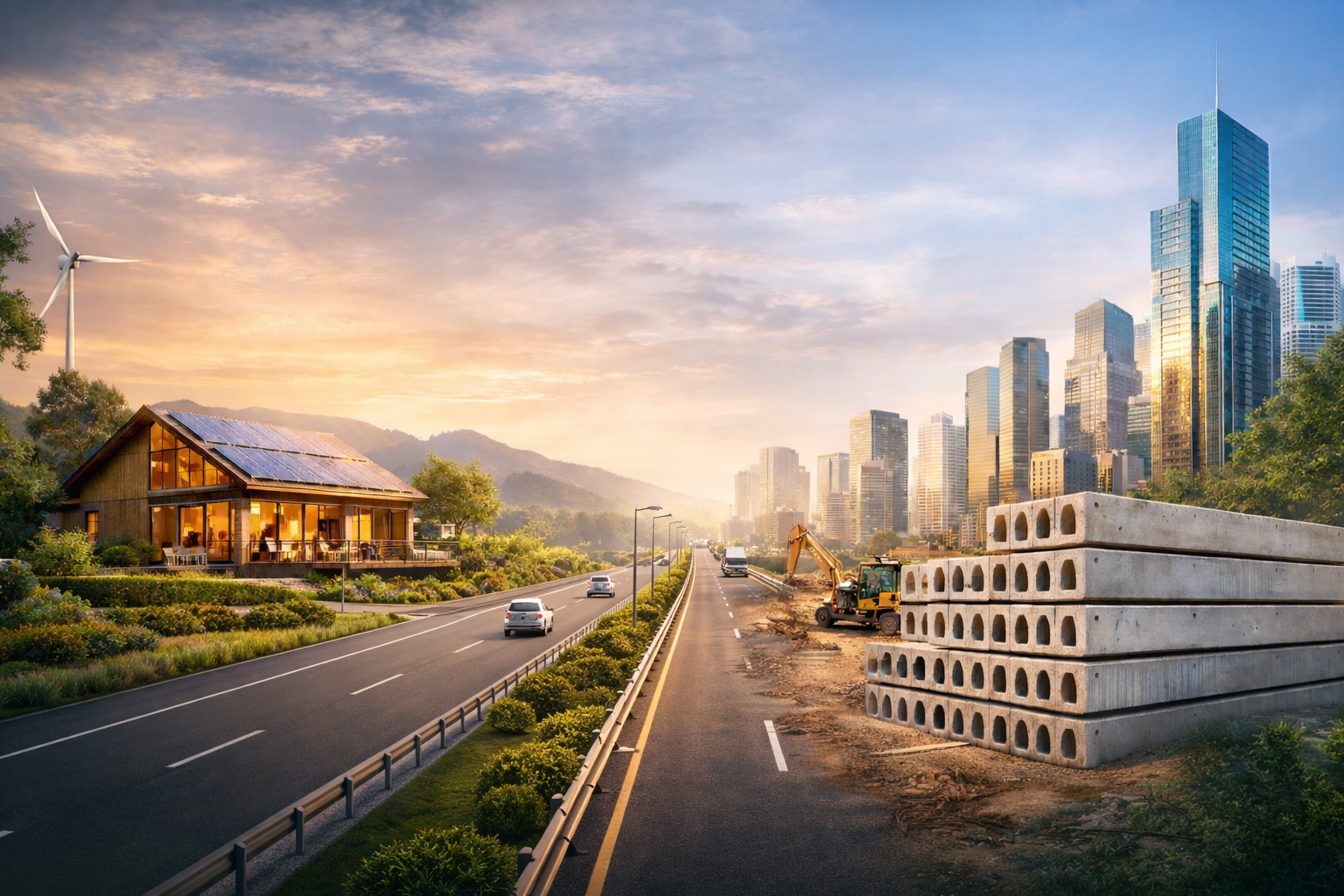
The global construction industry is undergoing a structural transformation, driven not by design trends but by environmental realities, regulatory pressure, and evolving market expectations. At the center of this transformation lies sustainable construction—a concept that is rapidly shifting from optional innovation to fundamental necessity.
According to the United Nations Environment Programme (UNEP), buildings account for nearly 37% of global energy-related CO₂ emissions, making construction one of the most critical sectors in addressing climate change.
In India, this transition is further reinforced by:
For HNIs, investors, policymakers, and business leaders, the question is no longer whether to adopt sustainable construction, but how quickly they can align with this inevitable shift.
Traditional construction relies heavily on:
UNEP highlights that building materials alone contribute nearly 18% of global emissions.
Additionally, construction activities generate massive C&D (Construction & Demolition) waste, now increasingly regulated in India.
Traditional methods are:
Studies from **Indian Institute of Technology Madras highlight that construction productivity has lagged behind other sectors due to outdated methods.
India is actively pushing toward sustainable construction through:
These policies are increasing compliance costs for inefficient construction practices.
According to ANAROCK Property Consultants:
This reflects a clear shift:
👉 Buyers are prioritizing quality, sustainability, and long-term value over price
India now has:
This growth directly supports the adoption of sustainable construction practices across segments.
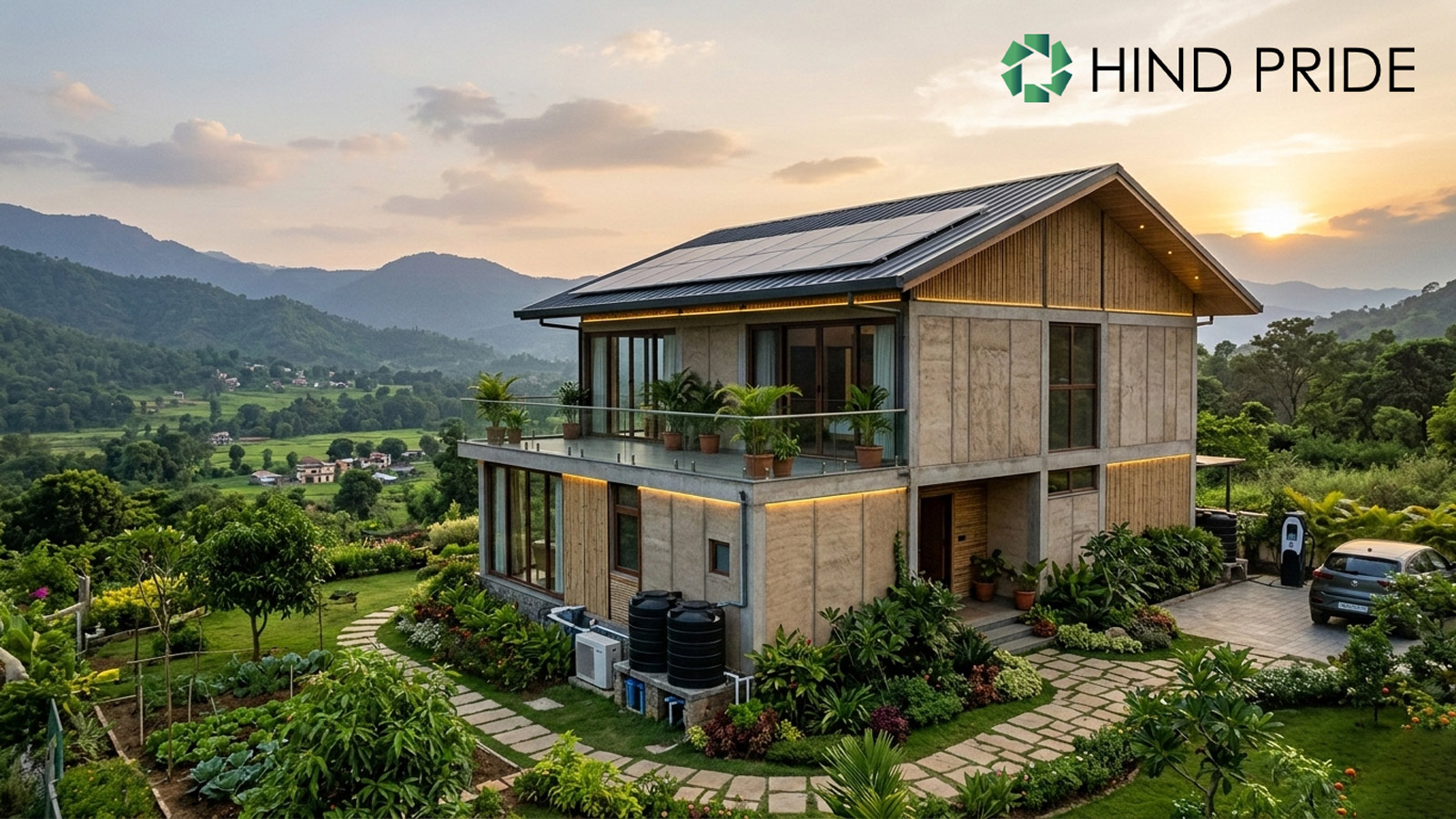
Eco-friendly farmhouses are emerging as:
Key drivers:
Eco-friendly farmhouses offer:
More importantly, they align with the future of sustainable construction and green living
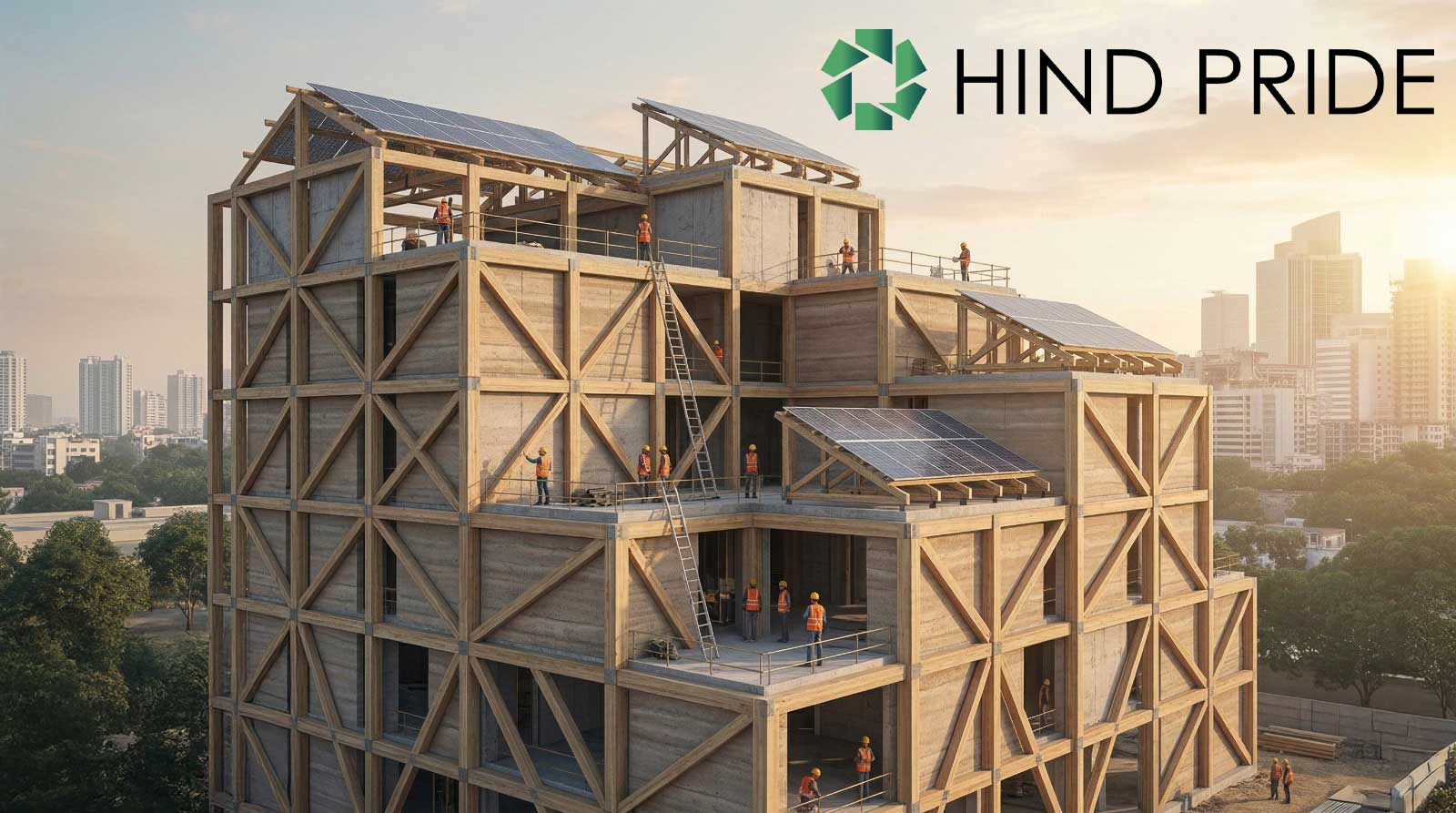
PCC panels (Precast Concrete Panels) are:
They are a key component of modern prefab construction systems
Traditional construction:
PCC panel construction:
1. Faster Project Completion
2. Cost Efficiency
3. Superior Quality and Precision
4. Sustainability Benefits
A modern eco-friendly farmhouse integrates:
Sustainable farmhouses offer:
Policy-Driven Growth
Government mandates will:
According to Colliers International:
Future trends:
Future assets will be judged on:
From:
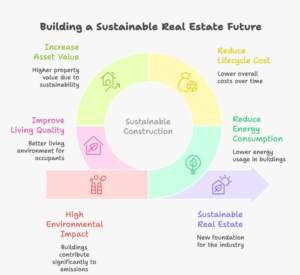
Developers adopting sustainable construction gain:
Sustainable construction is no longer a niche—it is becoming the foundation of modern real estate.
PCC panels and prefab construction represent:
Eco-friendly farmhouses represent:
The future of real estate will not be defined by how much we build, but by how intelligently and sustainably we build it.
Those who align early with sustainable construction will not just adapt to the future—they will define it.
1. What is sustainable construction and why is it important today?
Sustainable construction refers to building practices that minimize environmental impact while maximizing efficiency, durability, and long-term value. It focuses on reducing carbon emissions, conserving resources, and improving building performance.
Today, it is critical because the construction sector contributes nearly 37% of global CO₂ emissions, making it one of the largest contributors to climate change. Sustainable construction helps address this challenge while aligning with stricter environmental regulations and evolving buyer expectations.
2. How do PCC panels contribute to sustainable construction?
PCC panels (precast concrete panels) play a significant role in sustainable construction by enabling:
Unlike traditional construction, PCC panels are manufactured off-site, ensuring better efficiency and reduced environmental disruption
3. Are eco-friendly farmhouses a good investment in today’s market?
Yes, eco-friendly farmhouses are emerging as a strong investment segment within sustainable construction, driven by:
Additionally, premium housing demand in India is rising, with luxury homes forming a significant share of new developments.
4. What are the key benefits of sustainable construction for homeowners?
Sustainable construction offers multiple long-term benefits:
These advantages make sustainable construction not just environmentally responsible but financially beneficial as well.
5. How is the Indian government promoting sustainable construction?
The Indian government is actively encouraging sustainable construction through:
These frameworks are designed to improve energy efficiency, reduce waste, and promote eco-friendly building practices.
6. What is prefab construction and how is it different from traditional construction?
Prefab construction is a modern approach within sustainable construction, where building components (like PCC panels) are manufactured off-site and assembled on-site.
Key differences:
This makes prefab construction more efficient and environmentally responsible compared to traditional methods.
7. Why is sustainable construction becoming essential for future real estate development?
Sustainable construction is becoming essential due to:
As climate risks and resource scarcity increase, sustainable construction will define the long-term value of real estate assets.
8. What role do green building materials play in sustainable construction?
Green building materials are a core component of sustainable construction. They:
Materials like precast concrete, recycled steel, and low-carbon cement are helping transform the construction industry toward sustainability.
9. Is sustainable construction more expensive than traditional construction?
While the initial cost of sustainable construction may sometimes be slightly higher, it offers significant long-term savings through:
Over time, sustainable construction often proves more cost-effective than traditional methods.
10. How will sustainable construction shape the future of real estate in India?
Sustainable construction will shape the future of real estate by:
As India’s real estate sector is projected to grow significantly, sustainability will become a key differentiator for developers and investors.
In today’s rapidly evolving real estate landscape, the conversation is no longer limited to location, pricing, or immediate returns. It has expanded to include deeper considerations—efficiency, sustainability, long-term resilience, and the environmental impact of how we build.
Sustainable construction is not just a technical shift; it is a strategic mindset.
For investors, it represents:
For homeowners and developers, it means:
And for the broader ecosystem—policymakers, urban planners, and business leaders—it reflects a collective move toward responsible and forward-thinking development.
As technologies like PCC panels and prefab construction continue to evolve, they are not just improving construction efficiency—they are redefining what modern real estate should stand for.
The opportunity today lies in understanding this shift early.
Because the future will not be built on outdated methods—it will be shaped by those who recognize that sustainable construction is not an alternative, but the foundation of long-term value.