Housing in India has always evolved alongside the country’s growth. As cities expand and infrastructure improves, the expectations people have from their homes are also changing. A home is no longer seen only as a place to live — it is increasingly viewed as a long-term investment in comfort, health, efficiency, and lifestyle.
This is why the conversation around sustainable homes in 2026 is becoming more relevant across the Indian real estate sector. Sustainable housing does not replace traditional housing or criticize it; rather, it represents the natural evolution of how homes are designed and built as technology, environmental awareness, and lifestyle needs develop.
Across the world, the built environment is becoming more conscious of energy use and environmental impact. According to the UNEP Global Status Report for Buildings and Construction, the buildings sector accounted for nearly 34% of global energy demand and 37% of energy-related CO₂ emissions in 2022, highlighting the importance of improving building efficiency over time.
In India, where urban development is accelerating and new residential communities continue to emerge, sustainable homes in 2026 represent an opportunity to build housing that is not only comfortable today but also resilient and efficient for the future.
When people hear the term sustainable housing, they sometimes imagine a house with solar panels or greenery on balconies. While those features can contribute to sustainability, the idea is much broader.
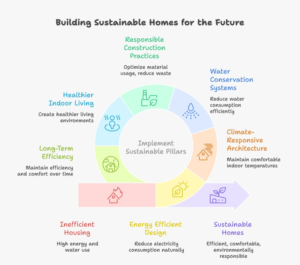
Sustainable homes in 2026 are typically designed around several interconnected principles:
These elements work together to create homes that support both comfortable living and responsible development.
India already has structured frameworks that guide environmentally responsible construction. For example, the Indian Green Building Council (IGBC) has developed the Green Homes rating system, which encourages residential projects to adopt sustainable practices in design and construction.
Similarly, GRIHA (Green Rating for Integrated Habitat Assessment) — India’s national green building rating system — promotes resource-efficient buildings that minimize environmental impact while improving occupant comfort.
These frameworks help define what sustainable residential development can look like in India’s diverse climatic and urban conditions.
Energy efficiency is one of the most important aspects of sustainable homes in 2026. As cities grow and temperatures rise in many regions, homes that are designed with thoughtful thermal performance can provide more comfortable indoor environments.
Energy-efficient housing does not rely solely on appliances or technologies. Instead, it begins with design decisions such as:
When these design strategies are implemented effectively, homes can reduce dependence on mechanical cooling and artificial lighting while maintaining comfortable indoor temperatures.
India’s Energy Conservation Building Code (ECBC), developed by the Bureau of Energy Efficiency (BEE), reflects the national focus on improving building efficiency. ECBC establishes minimum energy performance standards for buildings and aims to reduce energy consumption through better design and construction practices.
According to the BEE, buildings designed under ECBC guidelines can achieve significant reductions in energy consumption compared to conventional buildings, demonstrating the impact thoughtful design can have on energy performance.
For residential buyers, this means sustainable homes in 2026 are increasingly associated with better thermal comfort, more efficient electricity use, and improved long-term operating costs.
India’s geographic diversity makes climate-responsive architecture especially important. Housing designed for coastal climates may differ from housing designed for northern plains or dry inland regions.
This is why sustainable homes in 2026 are often designed with sensitivity to local environmental conditions. Climate-responsive architecture considers factors such as:
By aligning architectural design with local climate characteristics, homes can naturally maintain more comfortable indoor conditions.
The India Cooling Action Plan, developed by the Government of India, highlights the importance of improving building design and thermal performance to reduce cooling demand across the country.
This initiative emphasizes strategies such as improved building envelopes, passive cooling approaches, and better urban planning — all of which support the broader vision behind sustainable homes in 2026.
Sustainability in housing also involves how homes are constructed. Eco-friendly construction practices aim to optimize material usage, reduce construction waste, and improve efficiency during the building process.
The National Building Code (NBC) of India, developed by the Bureau of Indian Standards (BIS), provides comprehensive guidelines for building construction and safety standards across the country.
These guidelines help ensure that construction practices follow structured engineering, safety, and performance principles.
In addition, resource efficiency in construction is gaining attention in India as the construction sector continues to grow. Responsible planning and improved construction methods can help reduce material waste and encourage better resource management throughout the building lifecycle.
This aligns closely with the philosophy behind sustainable homes in 2026, where efficiency and durability are considered as important as aesthetics.
Water is another key component of sustainable housing design. India’s cities are increasingly recognizing the need to manage water resources responsibly through both urban planning and residential design.
Many modern housing projects now incorporate water management systems such as:
These measures help reduce pressure on municipal water supply systems while encouraging responsible water use.
Green building frameworks such as IGBC Green Homes encourage residential projects to adopt water efficiency measures as part of their sustainability strategy.
For residents, these systems contribute to long-term water availability and more resilient community infrastructure — another important reason why sustainable homes in 2026 are gaining popularity.
Technology is also playing a major role in the evolution of housing in India. Modern construction technologies, improved design software, and better project management systems are helping developers build homes more efficiently and with higher consistency.
The Government of India launched the Global Housing Technology Challenge (GHTC-India) to identify innovative construction technologies from around the world that can improve housing quality, speed, and sustainability.
The initiative highlights how modern construction technologies can support faster housing delivery while maintaining structural quality and environmental responsibility.
For homebuyers, these innovations contribute to the development of sustainable homes in 2026 that combine engineering precision with long-term efficiency.
India’s cities are expected to continue expanding over the coming decades. As urban populations grow, housing demand will remain strong, making the quality of residential development increasingly important.
Sustainable housing can play an important role in supporting this growth by encouraging:
These factors are essential for creating urban communities that remain livable, efficient, and adaptable in the future.
Rather than replacing existing housing approaches, sustainable homes in 2026 complement the natural progression of the housing sector as new technologies, policies, and design ideas continue to develop.
Beyond environmental considerations, sustainable housing also contributes to improved everyday living conditions.
Homes designed with better ventilation, natural lighting, and thermal comfort can create healthier indoor environments for residents. Access to daylight, improved airflow, and reduced heat gain can positively influence comfort and overall well-being.
Green building frameworks increasingly incorporate these factors because the performance of a home is closely connected to the health and comfort of the people living inside it.
As a result, sustainable homes in 2026 are often associated with living spaces that support both environmental responsibility and improved lifestyle quality.
One of the key reasons sustainable housing is gaining attention is its long-term value. A well-designed home can maintain efficiency and comfort for many years, supporting both lifestyle and property value.
Homebuyers today are increasingly considering aspects such as:
These considerations reflect a broader shift in how residential real estate is evaluated.
Rather than focusing only on immediate features, buyers are looking at how homes will perform over time. This makes sustainable homes in 2026 an important part of the evolving housing conversation.
1. What are sustainable homes in 2026, and why are they becoming important?
Sustainable homes in 2026 refer to residential properties designed with energy efficiency, responsible resource use, and long-term environmental performance in mind. These homes typically incorporate climate-responsive architecture, improved building materials, better ventilation, water management systems, and energy-efficient design strategies.
The growing importance of sustainable housing is closely linked to the environmental impact of the building sector. According to the UN Environment Programme Global Status Report, buildings account for a significant share of global energy consumption and emissions.
As cities expand and infrastructure grows, sustainable housing helps ensure that homes remain efficient, comfortable, and resilient for future generations.
2. How do sustainable homes in 2026 improve energy efficiency?
One of the defining features of sustainable homes in 2026 is improved energy efficiency through design and construction practices that reduce unnecessary energy consumption.
Energy-efficient homes often include:
India’s Energy Conservation Building Code (ECBC) promotes these principles by setting energy performance standards for buildings.
Homes designed using these strategies can significantly reduce electricity consumption and cooling demand.
3. How do sustainable homes in 2026 help reduce environmental impact?
Sustainable homes in 2026 aim to reduce environmental impact through responsible construction methods, efficient resource use, and better building performance over time.
These homes may incorporate:
Green building frameworks such as GRIHA (Green Rating for Integrated Habitat Assessment) help promote sustainable residential development in India.
These initiatives support the transition toward more environmentally responsible housing.
4. What role does climate-responsive architecture play in sustainable homes in 2026?
Climate-responsive architecture is a key element of sustainable homes in 2026. It involves designing homes that respond to local environmental conditions such as sunlight, wind direction, rainfall patterns, and seasonal temperature changes.
This design approach improves indoor comfort while reducing reliance on mechanical cooling and heating systems.
The India Cooling Action Plan highlights the importance of building design and passive cooling strategies in reducing cooling demand.
By aligning architecture with climate conditions, homes can maintain comfortable indoor environments more naturally.
5. Are sustainable homes in 2026 more expensive to build?
The cost of sustainable homes in 2026 depends on the design strategies and technologies used. Some sustainability features may involve slightly higher initial investment, but many of them can help reduce long-term operating costs.
For example, energy-efficient design can lower electricity consumption, while water conservation systems can reduce water usage over time.
Green building frameworks such as IGBC Green Homes encourage cost-effective sustainability practices that balance environmental responsibility with long-term value.
Over the lifecycle of a home, these efficiencies can contribute to improved economic value.
6. How do sustainable homes in 2026 improve indoor living comfort?
Sustainable homes in 2026 are often designed with indoor comfort and occupant well-being in mind. Features such as better ventilation, improved natural lighting, and climate-responsive materials contribute to healthier indoor environments.
These homes may provide:
Green building rating systems often include criteria related to indoor environmental quality because these factors directly influence residents’ health and comfort.
Such design principles help create living spaces that support both environmental sustainability and everyday comfort.
7. What government initiatives support sustainable homes in 2026 in India?
Several government initiatives encourage the development of sustainable homes in 2026 and environmentally responsible housing.
Important initiatives include:
These initiatives promote innovative construction technologies, improved building design, and efficient resource use.
Together, these programs help guide the development of housing that aligns with sustainability and infrastructure goals.
8. How do sustainable homes in 2026 contribute to water conservation?
Water conservation is an important part of sustainable homes in 2026. Many residential developments now incorporate water-efficient infrastructure to help reduce water consumption and support long-term water availability.
Common water conservation strategies include:
Green building standards encourage these practices to improve resource management and reduce pressure on municipal water systems.
These strategies support sustainable urban development and responsible water usage.
9. Why are sustainable homes in 2026 important for rapidly growing cities?
As India’s urban population continues to grow, housing must evolve to support sustainable urban development. Sustainable homes in 2026 help cities manage energy demand, water consumption, and environmental impact more effectively.
According to government housing initiatives, improving construction technology and building efficiency is essential for meeting future housing needs.
Sustainable housing contributes to more resilient and efficient urban infrastructure.
10. How can homebuyers identify sustainable homes in 2026?
Homebuyers interested in sustainable homes in 2026 can look for several indicators when evaluating residential properties.
These may include:
The National Building Code of India also provides guidelines that support safe and efficient construction practices.
Understanding these indicators can help buyers make informed decisions when choosing future-ready housing.
The conversation around housing in India is steadily evolving as cities grow, infrastructure expands, and homeowners begin to think more carefully about long-term comfort, efficiency, and environmental responsibility. Within this broader transformation, sustainable homes in 2026 represent a natural progression in how residential spaces are designed, built, and experienced.
Rather than replacing traditional housing approaches, sustainable housing builds upon existing architectural knowledge while integrating modern design principles, improved construction technologies, and resource-efficient planning. The goal is not simply to create visually appealing homes, but to create living spaces that perform better over time—both for residents and for the surrounding environment.
Across India, awareness about energy consumption, water conservation, and climate responsiveness is increasing. Government initiatives such as the Energy Conservation Building Code (ECBC) and the India Cooling Action Plan highlight the growing importance of energy-efficient building design in the country’s development strategy.
Similarly, green building frameworks such as IGBC Green Homes and GRIHA are encouraging residential projects to adopt more efficient resource management, improved building performance, and environmentally conscious design practices.
As these ideas continue to influence the real estate sector, sustainable homes in 2026 are becoming increasingly associated with homes that balance environmental awareness with everyday practicality. Energy-efficient layouts, climate-responsive architecture, water conservation systems, and durable construction methods all contribute to creating homes that are designed to remain comfortable and efficient over the long term.
For homeowners, this shift offers meaningful benefits. A thoughtfully designed sustainable home can support lower energy consumption, improved indoor comfort, and better resource efficiency. At the same time, it contributes to broader urban sustainability goals by encouraging responsible development practices within growing cities.
India’s urban population continues to expand, and with that growth comes an opportunity to shape residential environments that prioritize both quality of life and long-term sustainability. Initiatives such as the Global Housing Technology Challenge (GHTC-India) reflect this direction by encouraging innovative housing technologies that can improve construction quality, efficiency, and sustainability.
Ultimately, the future of housing will likely be defined not just by where homes are located, but by how intelligently they are designed and built. In this context, sustainable homes in 2026 represent a forward-looking approach to residential development—one that focuses on durability, efficiency, environmental responsibility, and comfortable living environments.
For developers and organizations involved in residential development, this evolving perspective creates an opportunity to contribute to communities that are thoughtfully planned and built with long-term value in mind. For brands such as Hindpride, aligning with these principles reflects a commitment to building homes that embrace responsible design, modern construction practices, and sustainable living for the years ahead.