India is undergoing one of the largest urban transformations in the world. According to the Ministry of Housing and Urban Affairs, the country’s urban population is expected to continue expanding significantly over the coming decades, creating an unprecedented demand for housing, infrastructure, and sustainable development solutions.
At the same time, climate challenges are becoming increasingly visible. Rising temperatures, unpredictable rainfall patterns, water scarcity, urban flooding, and increasing energy consumption are reshaping how homes are designed, constructed, and maintained. These challenges are no longer concerns for policymakers alone; they are becoming critical considerations for homeowners, investors, developers, and businesses alike.
In this evolving landscape, Sustainable Homes in India are emerging as a practical and future-oriented solution. More than just environmentally responsible buildings, these homes represent a new generation of residential development that combines energy efficiency, resource conservation, climate resilience, technological innovation, and long-term economic value.
For investors, HNIs, NRIs, bureaucrats, and business leaders, the conversation around housing is increasingly shifting from short-term acquisition costs to long-term sustainability, operational efficiency, and asset preservation. The homes that are likely to remain relevant and valuable over the next several decades will be those designed to adapt to changing environmental, economic, and regulatory realities.
One of the technologies supporting this transition is PCC Panel Construction. By improving construction efficiency, reducing material wastage, enhancing thermal performance, and supporting sustainable building practices, PCC panel systems are helping redefine how Sustainable Homes in India are built.
This article explores why Sustainable Homes in India are becoming essential, how PCC panel technology contributes to sustainable construction, and why climate-resilient housing may represent one of the most important real estate trends of the coming decades.
The concept of sustainability was once viewed as an optional feature. Today, it is increasingly becoming a necessity.
India’s Growing Climate Challenges
India has witnessed a rise in extreme weather events, including heatwaves, intense rainfall, water shortages, and urban flooding. According to the Intergovernmental Panel on Climate Change (IPCC), climate-related risks are expected to intensify across many regions during the coming decades.
For homeowners and investors, these environmental realities directly impact property performance, maintenance costs, and long-term livability.
As a result, Sustainable Homes in India are gaining attention because they are designed to reduce vulnerability to environmental risks while improving occupant comfort.
Rising Energy Consumption
The Bureau of Energy Efficiency highlights the growing importance of energy-efficient building practices as urbanization accelerates.
Traditional residential construction often relies heavily on artificial cooling systems. However, Sustainable Homes in India focus on passive design strategies, improved insulation, natural ventilation, and efficient energy systems to reduce overall energy demand.
Changing Expectations of Modern Homebuyers
Today’s buyers are increasingly looking beyond square footage and location.
They seek:
This shift is transforming market preferences and driving demand for Sustainable Homes in India across urban and emerging residential markets.
Many properties are marketed as green or eco-friendly, but genuine sustainability requires a holistic approach.
Energy Efficiency
Energy efficiency is one of the defining characteristics of Sustainable Homes in India.
This includes:
According to the International Energy Agency, buildings account for a significant share of global energy consumption, making efficiency improvements essential.
Water Conservation
Water scarcity is becoming a growing concern across several Indian cities.
Key water-saving features include:
These systems help Sustainable Homes in India reduce resource consumption while supporting long-term environmental sustainability.
Sustainable Building Materials
Material selection plays a critical role in reducing environmental impact.
Common sustainable materials include:
The use of responsible construction materials supports the broader objectives of Sustainable Homes in India.
Indoor Environmental Quality
Indoor environments significantly influence occupant health and productivity.
Features often found in Sustainable Homes in India include:
These factors contribute to healthier living environments.
As sustainable construction continues to evolve, alternative building technologies are gaining prominence.
One such innovation is PCC Panel Construction.
What Are PCC Panels?
PCC (Precast Concrete Composite) panels are engineered building components manufactured under controlled conditions before being assembled on-site.
This approach differs from conventional brick-and-mortar construction by emphasizing precision, efficiency, and quality control.
How PCC Panel Systems Work
The process typically involves:
This streamlined methodology contributes significantly to the goals of Sustainable Homes in India.
Advantages Over Conventional Construction
Compared to traditional methods, PCC panels can offer:
These characteristics make PCC panel technology increasingly relevant to Sustainable Homes in India.
The connection between PCC panels and sustainable housing is becoming increasingly important.
Reduced Material Wastage
Construction waste remains a major challenge across the building industry.
Because PCC panels are manufactured with greater precision, they help minimize material losses during construction.
This supports the resource-efficiency objectives associated with Sustainable Homes in India.
Lower Carbon Footprint
The Global Alliance for Buildings and Construction identifies the construction sector as a significant contributor to global emissions.
Efficient manufacturing processes and optimized material use can help reduce embodied carbon compared to conventional construction methods.
As demand for Sustainable Homes in India grows, carbon-conscious construction approaches are likely to become increasingly important.
Improved Thermal Performance
Thermal efficiency directly influences energy consumption.
Well-designed panel systems can help:
This contributes to the energy efficiency goals of Sustainable Homes in India.
Faster Construction Timelines
Shorter construction periods can reduce:
These benefits further strengthen the role of PCC panel technology in supporting Sustainable Homes in India.
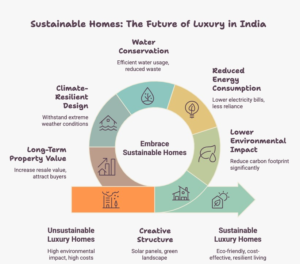
Climate resilience is becoming one of the most important dimensions of modern housing.
Heat-Resistant Design
Many Indian cities are experiencing increasing temperatures.
Climate-responsive design strategies include:
These features are increasingly incorporated into Sustainable Homes in India.
Flood Resilience
Urban flooding has become a recurring challenge in several metropolitan regions.
Resilience measures include:
Such strategies help protect long-term property value.
Water Management
Water security is likely to become a defining factor in future urban development.
Sustainable water systems support both environmental conservation and operational efficiency within Sustainable Homes in India.
Structural Durability
Resilient construction enhances the ability of buildings to withstand environmental stresses.
Long-lasting structures support the investment case for Sustainable Homes in India by reducing maintenance requirements and extending asset life cycles.
Beyond environmental considerations, sustainability offers compelling financial advantages.
Lower Utility Costs
Energy-efficient homes typically consume fewer resources.
Over time, reduced utility expenses can generate meaningful savings.
This makes Sustainable Homes in India attractive from both lifestyle and investment perspectives.
Reduced Maintenance Expenses
Durable materials and efficient systems often require less maintenance.
Lower lifecycle costs contribute to stronger long-term financial performance.
Property Appreciation Potential
Global real estate research increasingly indicates that sustainability features are influencing buyer preferences.
As awareness grows, Sustainable Homes in India may benefit from stronger demand and improved market positioning.
Future Buyer Demand
The next generation of homebuyers is likely to place greater emphasis on:
These trends support the long-term relevance of Sustainable Homes in India.
Investment Perspective for HNIs and NRIs
Sophisticated investors increasingly evaluate assets based on long-term sustainability.
For HNIs and NRIs, Sustainable Homes in India represent an opportunity to align investment decisions with evolving market dynamics and future regulatory trends.
India has emerged as a global leader in green building development.
According to the Indian Green Building Council (IGBC), the country has registered thousands of green building projects across multiple sectors.
Government Support
Various government initiatives continue to encourage sustainable development through:
These efforts create a supportive environment for the growth of Sustainable Homes in India.
Net-Zero Ambitions
India’s long-term sustainability commitments are expected to influence future construction practices.
As regulations evolve, Sustainable Homes in India may become increasingly aligned with national environmental objectives.
Technology is becoming a key enabler of sustainable living.
Smart Energy Management
Modern systems allow homeowners to monitor and optimize energy consumption in real time.
IoT-Based Monitoring
Connected devices help improve:
Renewable Energy Integration
Solar energy systems are increasingly incorporated into Sustainable Homes in India.
Benefits include:
Intelligent Communities
Future residential developments are expected to integrate sustainability, technology, and resilience at a community scale.
This evolution will further strengthen demand for Sustainable Homes in India.
Several countries have demonstrated how sustainability can be successfully integrated into residential development.
Scandinavia
Scandinavian nations have pioneered energy-efficient housing models focused on long-term sustainability.
Singapore’s urban planning strategies emphasize green infrastructure and resource efficiency.
Europe
Net-zero communities across Europe continue to demonstrate the potential of integrated sustainability strategies.
These international examples provide valuable insights for advancing Sustainable Homes in India.
1. What are Sustainable Homes in India?
Sustainable Homes in India are residential properties designed to reduce environmental impact while improving energy efficiency, water conservation, indoor air quality, and long-term durability. These homes typically incorporate sustainable construction materials, climate-responsive design, renewable energy systems, and efficient resource management practices.
The growing impact of climate change, urbanization, rising energy costs, and water scarcity is making Sustainable Homes in India more relevant than ever. These homes help reduce resource consumption while providing greater resilience against environmental challenges.
Sustainable Homes in India use energy-efficient technologies such as thermal insulation, natural ventilation, LED lighting, smart energy management systems, and solar power integration. These features significantly reduce dependence on conventional energy sources and lower utility costs.
PCC Panel Construction contributes to Sustainable Homes in India by reducing material wastage, improving construction efficiency, enhancing thermal performance, and supporting faster project completion. It also helps optimize resource utilization throughout the construction process.
Many investors view Sustainable Homes in India as a future-focused asset class because they can offer lower operating costs, improved resilience, growing buyer demand, and alignment with future sustainability regulations. As environmental awareness increases, sustainable properties may become more attractive in the real estate market.
Sustainable Homes in India reduce greenhouse gas emissions through energy-efficient design, sustainable construction materials, renewable energy integration, and efficient resource management. These measures help lower the overall environmental footprint of residential developments.
Investors evaluating Sustainable Homes in India should consider:
These factors can contribute to long-term property performance and future market demand.
Water-efficient homes often include rainwater harvesting systems, greywater recycling, low-flow fixtures, and smart irrigation technologies. These systems help reduce water consumption and improve resource efficiency.
Yes. Several government programs support sustainable development through green building initiatives, energy efficiency policies, smart city programs, and sustainable urban planning frameworks.
Sustainable Homes in India are often designed to maximize natural light, improve ventilation, reduce indoor pollutants, and maintain comfortable indoor temperatures. These features contribute to healthier and more comfortable living environments.
Luxury is evolving.
Traditionally, luxury housing focused on aesthetics and exclusivity.
Today, true luxury increasingly encompasses:
Comfort and Well-Being
High-quality indoor environments contribute to improved quality of life.
Responsible resource consumption is becoming a defining characteristic of premium residential developments.
In an era of environmental uncertainty, resilience itself is becoming a luxury feature.
Long-Term Value Creation
The combination of sustainability, efficiency, and resilience positions Sustainable Homes in India as future-oriented assets capable of meeting changing market expectations.
India stands at a defining moment in its urban development journey. The decisions made today regarding housing, infrastructure, and construction practices will shape the quality of life for generations to come.
As environmental challenges become more pronounced and resource efficiency gains importance, Sustainable Homes in India are emerging as one of the most practical solutions for future-ready living.
They represent more than an architectural trend. They embody a broader shift toward responsible development, intelligent design, environmental stewardship, and long-term economic value.
PCC panel construction further strengthens this transformation by enabling efficient building processes, reducing material wastage, improving thermal performance, and supporting sustainable construction objectives.
For investors, HNIs, NRIs, policymakers, and environmentally conscious homeowners, the growing relevance of Sustainable Homes in India extends beyond sustainability alone. It reflects a strategic response to changing climate realities, evolving consumer expectations, and future regulatory landscapes.
The homes most likely to retain relevance, desirability, and value over the coming decades will be those designed with resilience, efficiency, and adaptability at their core.
In that context, Sustainable Homes in India are not simply the future of housing—they are becoming the foundation of future living itself.