Table of Contents
ToggleIndia’s housing and infrastructure sector is gradually entering one of its most important transitions in decades. For years, urban development largely focused on connectivity, expansion, and rapid construction. Today, another layer is becoming equally important — sustainability, energy efficiency, climate resilience, and long-term resource optimization.
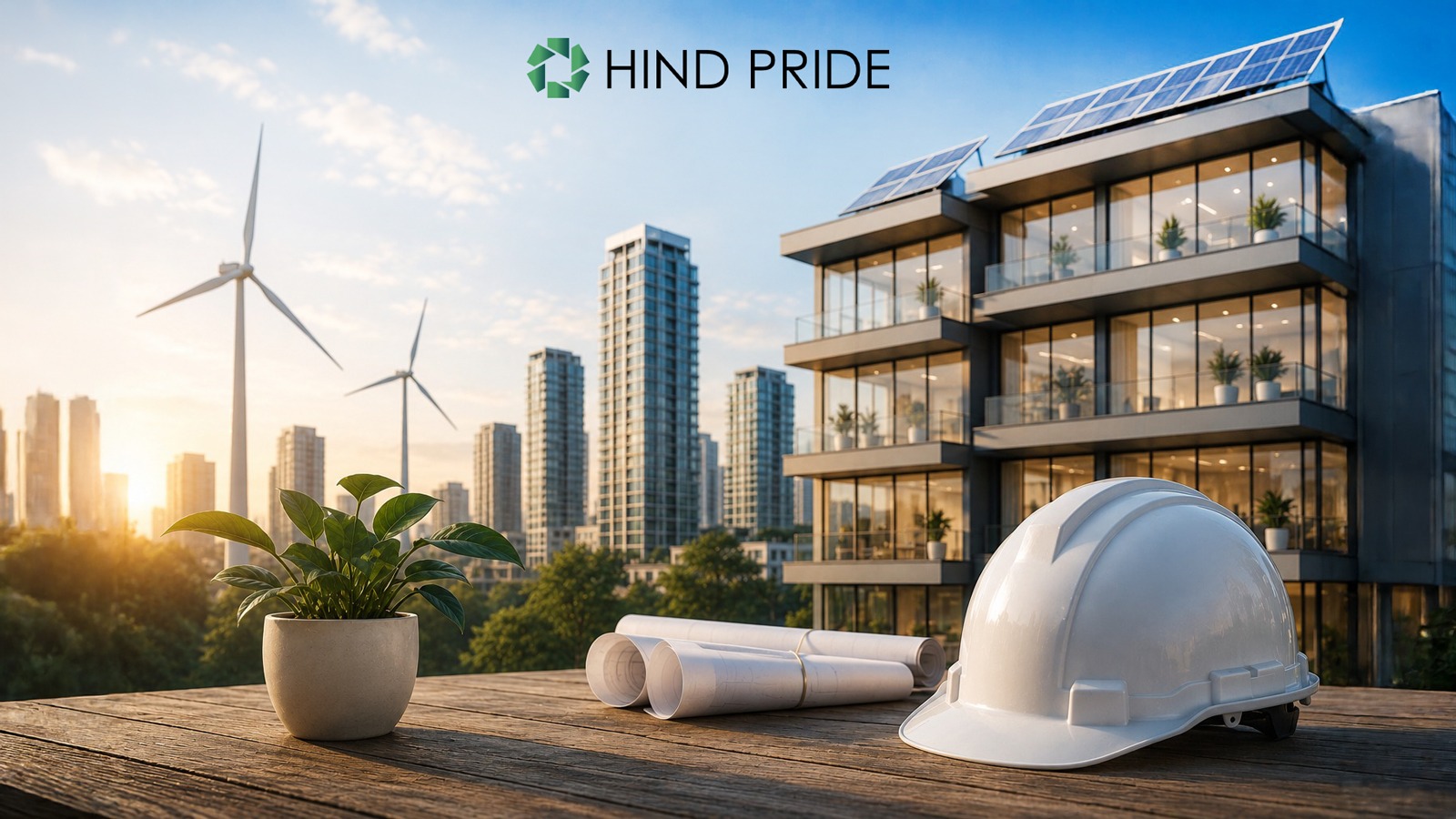
Across cities, towns, and emerging urban corridors, eco-friendly homes in India are increasingly becoming part of mainstream conversations among homeowners, policymakers, investors, architects, and infrastructure developers. Rooftop solar systems, rainwater harvesting, energy-efficient appliances, smart water management, sustainable construction materials, and climate-responsive building designs are no longer viewed as niche lifestyle choices. They are becoming part of India’s broader infrastructure evolution.
This shift is being supported by multiple factors:
India’s renewable energy ambitions and sustainable infrastructure policies are now influencing how homes and buildings are designed, constructed, and evaluated. In parallel, homeowners are also becoming more conscious about long-term operational costs, water security, energy consumption, and environmental impact.
Government initiatives such as the PM Surya Ghar Muft Bijli Yojana, rooftop solar subsidy programs, Smart Cities Mission, and energy-efficiency frameworks are accelerating the adoption of eco-friendly infrastructure across the country.
According to the Ministry of New and Renewable Energy (MNRE), India’s cumulative solar power capacity reached over 150 GW by March 2026, while rooftop solar installations crossed 25 GW, reflecting the country’s expanding renewable energy ecosystem.
At the same time, sustainable construction practices and green buildings are increasingly being viewed as long-term infrastructure assets aligned with India’s climate and development priorities.
For investors, businesses, policymakers, and infrastructure companies, the conversation around eco-friendly homes in India is no longer limited to environmental responsibility. It is becoming connected to long-term economic resilience, energy security, urban efficiency, and future-ready development.
Rising Urbanization and Infrastructure Pressure
India is witnessing one of the world’s largest urban expansion cycles. Rapid population growth and urban migration are increasing pressure on electricity systems, water resources, transportation networks, and urban infrastructure.
According to the Bureau of Energy Efficiency (BEE), residential buildings account for nearly 75% of total building-sector electricity consumption in India. Residential electricity demand is projected to rise significantly over the coming years as urbanization and appliance ownership continue expanding.
Cooling demand is also emerging as a major challenge. As temperatures rise and air-conditioning adoption increases, residential energy consumption is expected to accelerate further.
This is where eco-friendly homes in India are becoming increasingly relevant. Sustainable housing solutions aim to reduce energy consumption, improve thermal comfort, optimize water usage, and support long-term urban sustainability.
India is experiencing growing climate-related pressures including:
Buildings and infrastructure systems play a major role in environmental impact. Construction activities contribute significantly to carbon emissions, resource extraction, and energy consumption.
Sustainable homes and green buildings are being viewed as one of the practical pathways toward reducing long-term environmental pressure while improving urban resilience.
Eco-friendly homes in India are increasingly integrating:
The goal is not simply to create modern housing, but to create climate-responsive and resource-efficient infrastructure capable of supporting long-term urban growth.
PM Surya Ghar Muft Bijli Yojana
One of the most significant renewable energy initiatives currently driving sustainable housing adoption in India is the PM Surya Ghar Muft Bijli Yojana.
The scheme aims to promote rooftop solar adoption across residential households by offering financial assistance and subsidies for rooftop solar installations.
The official scheme highlights support for households installing rooftop solar systems and aims to encourage widespread renewable energy participation at the residential level.
This initiative reflects a broader policy direction where residential properties are gradually being integrated into India’s renewable energy ecosystem.
Key Impacts of Rooftop Solar Adoption
The growing popularity of rooftop solar systems in India also indicates a shift in how homeowners are evaluating long-term property efficiency.
India’s sustainable housing transition is also being supported through energy-efficiency regulations and building frameworks.
The Eco-Niwas Samhita (ENS) developed by the Bureau of Energy Efficiency focuses on improving thermal efficiency and reducing energy consumption in residential buildings.
The framework promotes:
Such frameworks are becoming increasingly relevant as Indian cities face rising temperatures and higher cooling demand.
India’s Smart Cities Mission is another important initiative influencing sustainable urban infrastructure.
The mission promotes:
The future of eco-friendly homes in India is closely connected with how cities evolve toward integrated, sustainable, and technology-driven infrastructure ecosystems.
India’s Expanding Solar Energy Ecosystem
India’s renewable energy sector has grown rapidly over the last decade.
According to MNRE, India’s total solar capacity crossed 150 GW by March 2026, reflecting one of the world’s largest renewable energy expansion programs.
Rooftop solar adoption is also increasing steadily due to:
This transition is gradually reshaping residential infrastructure across multiple income categories.
Solar-Powered Residential Communities
Many new residential developments are integrating renewable energy systems directly into project planning.
Solar-powered communities may include:
The concept of sustainable communities is gradually expanding beyond individual homes toward larger integrated infrastructure ecosystems.
Renewable energy adoption supports broader national priorities including:
Eco-friendly homes in India are becoming part of this larger renewable energy transformation.
The Rise of Sustainable Construction Materials
Sustainable construction materials are becoming increasingly important in modern infrastructure development.
The focus is gradually shifting toward materials that improve efficiency while reducing environmental impact.
Examples include:
These materials are often associated with:
Green Buildings in India
India’s green building sector has expanded substantially over recent years.
The Indian Green Building Council (IGBC) reports billions of square feet of registered green building projects across sectors including residential, commercial, industrial, and institutional developments.
Green buildings are increasingly emphasizing:
This reflects a broader shift toward sustainable infrastructure planning across India.
One of the key trends shaping eco-friendly homes in India is passive cooling.
Passive cooling techniques help reduce cooling demand without relying entirely on air-conditioning systems.
These approaches include:
Climate-responsive architecture is likely to become increasingly important as Indian cities experience rising temperatures and growing energy demand.
Rainwater Harvesting Systems
Rainwater harvesting is becoming increasingly common across residential developments and independent homes.
The Government of India has also encouraged adoption through model building guidelines and urban planning frameworks.
Rainwater harvesting systems help:
Homeowners are also adopting:
These systems contribute toward reducing long-term electricity consumption and operational costs.
Eco-conscious residential practices are increasingly extending beyond energy systems.
Many modern sustainable homes now include:
These initiatives support biodiversity, improve thermal comfort, and contribute toward healthier urban environments.
Understanding Net-Zero Buildings
Net-zero buildings are structures designed to balance total energy consumption with renewable energy generation.
These buildings aim to:
India’s long-term infrastructure vision is increasingly aligned with low-carbon and net-zero development models.
India’s Long-Term Sustainable Infrastructure Vision
According to NITI Aayog, India’s future infrastructure growth presents both a challenge and an opportunity because a large share of future building stock is yet to be constructed.
This creates an important opportunity to integrate sustainability into future infrastructure planning from the beginning rather than retrofitting older systems later.
Future sustainable cities are expected to integrate:
The evolution of eco-friendly homes in India is closely linked to how cities develop integrated sustainable infrastructure ecosystems.
Why Sustainable Infrastructure Is Becoming a Long-Term Investment Theme
Globally, investors are increasingly focusing on infrastructure sectors aligned with sustainability, energy efficiency, and environmental resilience.
In India, this includes:
As policy support and consumer awareness continue increasing, sustainable infrastructure is gradually emerging as a long-term structural growth theme.
Long-Term Value of Sustainable Homes
Eco-friendly homes in India may increasingly attract attention because of:
While sustainability was once viewed as a premium niche, it is gradually becoming associated with future-ready infrastructure planning.
Initial Cost Perception
One of the major barriers remains the perception that sustainable housing is significantly more expensive.
However, many sustainable systems are increasingly being evaluated through long-term lifecycle savings rather than only upfront costs.
Awareness and Skill Development
The expansion of sustainable infrastructure also requires:
As adoption increases, industry ecosystems around sustainable construction are expected to mature further.
India’s long-term infrastructure trajectory is increasingly moving toward sustainability, renewable energy integration, climate resilience, and energy efficiency.
The future of eco-friendly homes in India is likely to be influenced by:
As cities expand and infrastructure demand rises, sustainable construction practices may become increasingly important for balancing growth with long-term environmental responsibility.
The next generation of infrastructure may not only be evaluated by scale and connectivity, but also by:
1: What are eco-friendly homes in India and why are they becoming important?
Eco-friendly homes in India are residential properties designed to reduce environmental impact through energy efficiency, sustainable construction materials, renewable energy integration, water conservation systems, and climate-responsive architecture. These homes often include rooftop solar systems, rainwater harvesting, thermal insulation, natural ventilation, smart energy management, and waste reduction practices.
The growing importance of eco-friendly homes in India is linked to rising electricity demand, increasing urbanization, climate-related challenges, and long-term sustainability goals. Government initiatives promoting renewable energy and green infrastructure are also accelerating awareness around sustainable housing.
India’s sustainable housing movement is gradually shifting from a niche lifestyle concept toward a long-term infrastructure and urban development priority.
2: How do rooftop solar systems support eco-friendly homes in India?
Rooftop solar systems are one of the most important features supporting eco-friendly homes in India because they help homeowners generate renewable electricity directly from sunlight. These systems reduce dependency on conventional grid power while supporting long-term energy efficiency.
The Indian government has also introduced subsidy-based initiatives such as PM Surya Ghar Muft Bijli Yojana to encourage residential rooftop solar adoption. Rooftop solar systems can help reduce monthly electricity expenses while supporting India’s broader renewable energy transition.
As renewable energy infrastructure expands, rooftop solar systems are increasingly becoming part of sustainable residential planning across urban and semi-urban regions.
3: What government schemes are supporting eco-friendly homes in India?
Several government initiatives are supporting eco-friendly homes in India through renewable energy promotion, energy-efficiency frameworks, and sustainable urban planning policies.
Major initiatives include:
These programs aim to encourage energy-efficient housing, rooftop solar adoption, smart infrastructure development, and sustainable urban growth.
Government frameworks are increasingly recognizing that sustainable housing and green infrastructure are essential for India’s long-term climate and urban development goals.
4: Why are sustainable homes in India becoming attractive for long-term investors?
Sustainable homes in India are increasingly being viewed as long-term infrastructure assets because they align with future urban development trends focused on energy efficiency, climate resilience, and operational sustainability.
Investors are gradually recognizing that eco-friendly homes may offer advantages such as:
As climate regulations, renewable energy adoption, and sustainable urban planning continue evolving, green housing and sustainable infrastructure may become increasingly relevant within future real estate and infrastructure ecosystems.
5: How do sustainable construction materials improve eco-friendly homes in India?
Sustainable construction materials help improve eco-friendly homes in India by reducing environmental impact while supporting energy efficiency and long-term durability.
These materials may include:
Sustainable construction materials are often associated with reduced construction waste, faster project timelines, improved insulation performance, and lower embodied carbon emissions.
As India expands its infrastructure capacity, sustainable materials are becoming increasingly important in climate-responsive construction practices.
6: What role does rainwater harvesting play in eco-friendly homes in India?
Rainwater harvesting plays a significant role in eco-friendly homes in India because it helps improve water conservation and urban water resilience.
Rainwater harvesting systems collect and store rainwater for future use or groundwater recharge. These systems are becoming increasingly relevant as Indian cities experience water stress and growing urban demand.
Benefits of rainwater harvesting include:
Government urban planning frameworks and building guidelines are also encouraging wider adoption of rainwater harvesting systems across residential developments.
7: What are net-zero buildings and how are they connected to eco-friendly homes in India?
Net-zero buildings are structures designed to balance energy consumption with renewable energy generation, often through rooftop solar systems and highly energy-efficient building designs.
These buildings aim to minimize operational energy demand through:
Net-zero buildings are becoming increasingly relevant in discussions around eco-friendly homes in India because they support long-term sustainability and lower carbon emissions.
India’s future infrastructure and urban development strategies are gradually incorporating low-carbon and net-zero infrastructure concepts.
8: How are smart green cities influencing eco-friendly homes in India?
Smart green cities are influencing eco-friendly homes in India by promoting integrated sustainable infrastructure systems that combine renewable energy, efficient urban planning, smart utilities, and environmentally responsible development.
Smart city initiatives increasingly focus on:
As smart urban ecosystems evolve, eco-friendly homes are becoming an important part of future-ready city planning and sustainable infrastructure development.
9: How do eco-friendly homes in India support long-term energy efficiency?
Eco-friendly homes in India support long-term energy efficiency by reducing unnecessary electricity consumption through climate-responsive design and efficient infrastructure systems.
Key energy-efficiency features may include:
These features help optimize energy usage while reducing long-term operational costs and improving residential sustainability.
As cooling demand and electricity consumption continue rising across Indian cities, energy-efficient housing is becoming increasingly important for future urban resilience.
10: What is the future outlook for eco-friendly homes and sustainable infrastructure in India?
The future outlook for eco-friendly homes in India is closely linked to the country’s long-term renewable energy goals, urbanization trends, climate resilience strategies, and sustainable infrastructure policies.
Future infrastructure growth is expected to increasingly focus on:
As India continues expanding its residential and infrastructure capacity, sustainability is expected to become a more central consideration in future development models.
The long-term transition toward eco-friendly homes and sustainable infrastructure reflects a broader effort to balance economic growth with environmental responsibility and resource efficiency.
India’s transition toward eco-friendly homes, rooftop solar systems, renewable energy integration, and sustainable infrastructure reflects a larger shift in how the country is preparing for future urban development.
Sustainability is gradually moving from a specialized concept toward a broader infrastructure priority supported by government policies, renewable energy growth, urban planning initiatives, and changing consumer awareness.
For policymakers, investors, infrastructure companies, and businesses, this transition represents more than environmental responsibility. It reflects a long-term approach toward energy efficiency, climate resilience, resource optimization, and future-ready urban development.
As India continues building its future infrastructure, sustainable construction systems, eco-conscious planning, and energy-efficient housing solutions are likely to play an increasingly important role in shaping resilient and efficient urban ecosystems.
Within this evolving landscape, companies and infrastructure stakeholders focusing on sustainable and eco-friendly construction practices are aligning with the broader direction of India’s long-term infrastructure transformation.
Hindpride reflects this larger sustainable vision by focusing on eco-friendly construction approaches designed around efficiency, responsible development, and future-oriented infrastructure thinking.